English
 Español
 tiếng việt
 русский
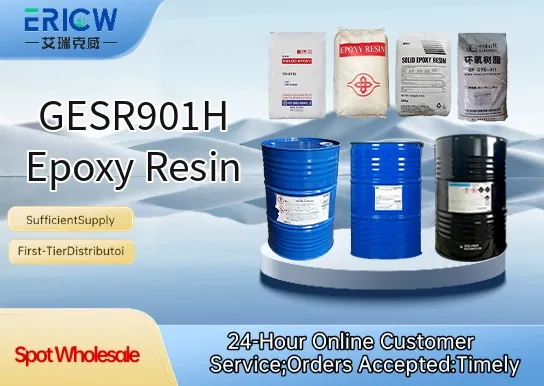
High reactivity with amine and anhydride hardeners for rapid gelation and reduced cycle times.
Excellent adhesion to metals, composites, and treated plastics under ambient and elevated cure conditions.
Low viscosity (8,000–12,000 cP at 25°C) enabling easy processing, impregnation, and air release.
Superior electrical insulation properties with high dielectric strength and volume resistivity.
Good chemical resistance to weak acids, alkalis, and solvents after full cure.
Electrical encapsulation of transformers, reactors, and high-voltage insulators.
Structural adhesive formulation for aerospace composite bonding and metal-to-metal joining.
Matrix resin for filament-wound pressure vessels and fiber-reinforced polymer (FRP) tanks.
Underfill and glob-top protection for power electronics and IGBT modules.
Castings and potting compounds for industrial sensors and control system housings.
| Chemical Type | Diglycidyl ether of bisphenol-F (BPF) |
| Product Form | Clear, low-viscosity liquid |
| Appearance | Amber to pale yellow, transparent |
| Epoxy Equivalent Weight (EEW) | 175–185 g/eq |
| Viscosity (25°C) | 9,500 ± 1,500 cP |
| Softening Point | Not applicable (liquid at room temperature) |
| Chloride Content | ≤ 500 ppm |
| Storage Stability | 12 months at 20–25°C in sealed container |
Q1: What is the primary functional advantage of GESR901H in epoxy formulations?
A: GESR901H is engineered to deliver enhanced flexibility and impact resistance while maintaining strong adhesion and chemical resistance—making it especially valuable in structural adhesives and protective coatings where thermal cycling or mechanical stress is expected.
Q2: Is GESR901H suitable for high-temperature curing processes?
A: Yes—GESR901H is compatible with standard epoxy curing agents and performs well under elevated temperature cures (e.g., 120–180 °C), enabling improved crosslink density and long-term thermal stability in demanding applications such as aerospace composites or electrical encapsulants.
Q3: How does GESR901H compare to conventional bisphenol-A epoxy resins in terms of viscosity and processability?
A: GESR901H exhibits lower melt viscosity than many standard solid epoxies at processing temperatures, facilitating easier handling, improved filler wetting, and reduced mixing energy—particularly beneficial in solvent-free or high-solids coating and adhesive systems.
Q4: Can GESR901H be used in food-contact or potable water applications?
A: GESR901H is not pre-certified for direct food contact or drinking water applications. Formulators must conduct full regulatory evaluation—including migration testing and compliance verification—based on final cured system composition and intended use conditions.
Contact With Us:
E-mail: wangxingqiang@ericwchem.com
Have a Questions? Call Us:
Add:
Building A1, Jiete Industrial Park, Huangpu District, Guangzhou City, Guangdong Province, China