English
 Español
 tiếng việt
 русский
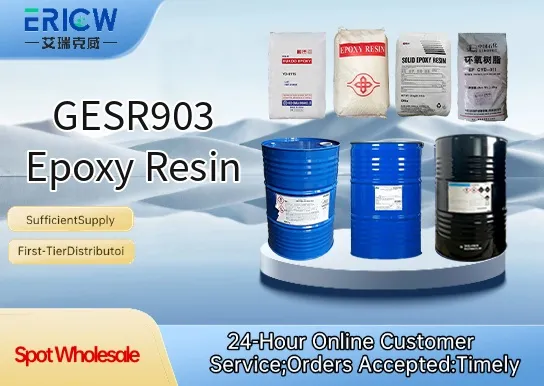
High reactivity with amine and anhydride curing agents for rapid gelation and short cycle times.
Excellent adhesion to metals, composites, and cured epoxy substrates without primer.
Low viscosity (12,000–15,000 cP at 25°C) enabling easy processing, impregnation, and flow control.
Superior chemical resistance to alkalis, solvents, and mild acids after full cure.
Low chloride content (< 800 ppm), minimizing corrosion risk in electronic and aerospace applications.
Structural adhesives for automotive bonding and lightweight composite assembly.
Matrix resin for filament-wound pressure vessels and CFRP wind blade components.
Encapsulants and potting compounds for high-reliability power electronics.
Tooling resins for low-CTE, dimensionally stable molds and master models.
Electrical laminates requiring high dielectric strength and tracking resistance.
| Chemical Type | Bisphenol-F based liquid epoxy resin |
| Product Form | Clear, amber-colored low-viscosity liquid |
| Appearance | Transparent, slightly viscous liquid at 25°C |
| Epoxy Equivalent Weight (EEW) | 185–195 g/eq |
| Viscosity (25°C) | 12,000–15,000 cP |
| Chloride Content | < 800 ppm |
| Softening Point | Not applicable (liquid at room temperature) |
| Storage Stability | 12 months at ≤25°C in sealed containers |
Q1: What is the primary functional role of GESR903 in epoxy formulations?
A: GESR903 is a reactive liquid epoxy resin modifier designed to enhance flexibility, impact resistance, and adhesion performance without significantly compromising thermal stability or chemical resistance in cured systems.
Q2: Is GESR903 compatible with standard amine and anhydride curing agents?
A: Yes — GESR903 demonstrates broad compatibility with common aliphatic and aromatic amines, as well as cyclic anhydrides. It participates fully in the crosslinking reaction and does not require special pre-treatment or catalysts under typical processing conditions.
Q3: How does GESR903 affect pot life and gel time in formulated systems?
A: When incorporated at typical dosage levels, GESR903 generally extends working time modestly compared to unmodified DGEBA resins, due to its lower reactivity and reduced system viscosity — though exact effect depends on cure chemistry, temperature, and overall formulation balance.
Q4: Can GESR903 be used in high-gloss, low-VOC coating applications?
A: Yes — its low volatility, absence of solvents, and ability to support smooth film formation make it suitable for high-performance, low-VOC industrial coatings where enhanced toughness and substrate wetting are required.
Contact With Us:
E-mail: wangxingqiang@ericwchem.com
Have a Questions? Call Us:
Add:
Building A1, Jiete Industrial Park, Huangpu District, Guangzhou City, Guangdong Province, China