English
 Español
 tiếng việt
 русский
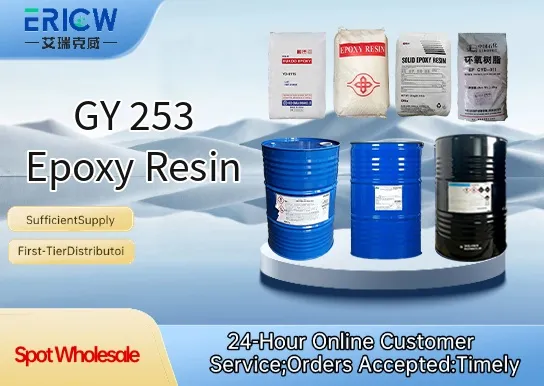
High purity bisphenol-A based liquid epoxy resin with consistent molecular weight distribution.
Excellent adhesion to metals, composites, and cured polymer substrates.
Low viscosity (10,000–12,000 cP at 25°C) enabling easy processing and efficient impregnation.
Superior thermal stability with glass transition temperature (Tg) up to 125°C after full curing with standard amine hardeners.
Low chloride content (< 800 ppm), ensuring enhanced corrosion resistance in protective coatings.
Electrical insulation systems for transformers, bushings, and encapsulated components.
Structural adhesives in aerospace and automotive composite bonding.
High-performance protective coatings for marine and offshore infrastructure.
Matrix resin for fiber-reinforced plastics (FRP) used in wind turbine blades and pressure vessels.
Potting and encapsulation of sensitive electronic modules requiring dielectric integrity and moisture resistance.
| Chemical Type | Bisphenol-A diglycidyl ether (DGEBA) |
| Product Form | Clear, pale yellow liquid |
| Appearance | Transparent, slightly viscous liquid without sediment or haze |
| Epoxy Equivalent Weight (EEW) | 185–192 g/eq |
| Viscosity (25°C) | 10,000–12,000 cP |
| Chloride Content | ≤ 800 ppm |
| Volatiles Content | ≤ 0.3 wt% |
| Storage Stability | 12 months at 20–25°C in sealed original containers |
Q1: What is the primary functional role of GY 253 Epoxy Resin in formulated systems?
A: GY 253 Epoxy Resin functions primarily as a reactive diluent and viscosity modifier in epoxy-based coatings, adhesives, and composites. It reduces system viscosity without significantly compromising crosslink density or final mechanical performance, enabling improved processability and substrate wetting.
Q2: Is GY 253 compatible with standard amine-based hardeners?
A: Yes, GY 253 exhibits good reactivity with common aliphatic and cycloaliphatic amines, as well as aromatic amine adducts. Its glycidyl ether structure supports consistent cure kinetics under ambient or elevated temperature conditions, though optimal stoichiometry and cure schedule should be verified for each specific formulation.
Q3: How does GY 253 compare to conventional bisphenol-A epoxy resins in terms of flexibility and thermal resistance?
A: As a monofunctional reactive diluent, GY 253 imparts greater chain mobility and reduced crosslink density compared to difunctional resins like DGEBA. This generally results in improved flexibility and impact resistance, but may lead to slightly lower heat distortion temperature in the cured network — trade-offs that are commonly managed through resin blending.
Q4: Can GY 253 be used in high-solids or solvent-free epoxy systems?
A: Yes, GY 253 is widely employed in high-solids and 100% solids epoxy formulations due to its low volatility, favorable viscosity reduction efficiency, and compatibility with common epoxy resins and curing agents. It helps achieve target application viscosities while maintaining acceptable pot life and film formation characteristics.
Contact With Us:
E-mail: wangxingqiang@ericwchem.com
Have a Questions? Call Us:
Add:
Building A1, Jiete Industrial Park, Huangpu District, Guangzhou City, Guangdong Province, China