English
 Español
 tiếng việt
 русский
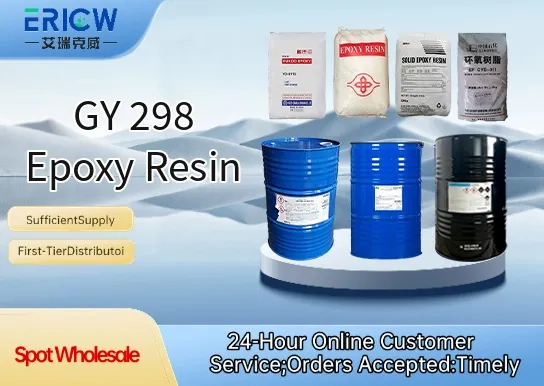
High purity bisphenol-A based liquid epoxy resin with consistent epoxide equivalent weight (EEW).
Excellent thermal stability and low volatility, supporting safe handling and processing at elevated temperatures.
Superior adhesion to metals, glass, and composite substrates without requiring surface primers.
Low viscosity (11,000–13,000 cP at 25°C) enabling easy mixing, degassing, and impregnation in demanding formulations.
Reactive functionality optimized for compatibility with standard amine and anhydride curing agents.
Electrical insulation systems for medium-voltage power transformers and bushings.
Structural adhesive formulations in aerospace and automotive composites manufacturing.
Encapsulation and potting compounds for high-reliability electronic modules and sensors.
Wind turbine blade bonding and root-end structural reinforcement systems.
High-performance coatings for corrosion protection in offshore and chemical processing equipment.
| Chemical Type | Bisphenol-A diglycidyl ether (DGEBA) |
| Product Form | Clear, pale yellow liquid |
| Appearance | Transparent, slightly viscous liquid, free of gels or sediment |
| Epoxide Equivalent Weight (EEW) | 188–194 g/eq |
| Viscosity (25°C) | 11,000–13,000 cP |
| Chloride Content | ≤ 500 ppm |
| Softening Point | Not applicable (liquid at room temperature) |
| Key Features | High reactivity, low ionic impurities, excellent hydrolytic stability |
Q1: What is the primary function of GY 298 Epoxy Resin in coating and adhesive formulations?
A: GY 298 Epoxy Resin serves as a reactive diluent and viscosity modifier, enhancing flow, leveling, and crosslink density without significantly compromising thermal or chemical resistance. It is commonly incorporated to improve processability while maintaining robust final film properties.
Q2: Is GY 298 compatible with standard amine-based hardeners?
A: Yes, GY 298 exhibits good reactivity with aliphatic, cycloaliphatic, and aromatic amine hardeners. Its epoxy functionality allows for efficient co-curing, though optimal stoichiometry and cure schedule should be verified experimentally for each specific system.
Q3: How does GY 298 compare to conventional bisphenol-A epoxy resins in terms of flexibility and toughness?
A: GY 298 offers improved flexibility and impact resistance relative to high-molecular-weight solid epoxies, owing to its lower viscosity and tailored molecular architecture. It contributes enhanced toughness without requiring external plasticizers, making it suitable for demanding structural and protective applications.
Q4: Can GY 298 be used in UV-curable systems?
A: No — GY 298 is a thermally curable epoxy resin and lacks photosensitive groups. It is not designed for free-radical or cationic UV curing pathways. For UV applications, dedicated epoxy acrylates or vinyl ether-modified epoxies are recommended instead.
Contact With Us:
E-mail: wangxingqiang@ericwchem.com
Have a Questions? Call Us:
Add:
Building A1, Jiete Industrial Park, Huangpu District, Guangzhou City, Guangdong Province, China