English
 Español
 tiếng việt
 русский
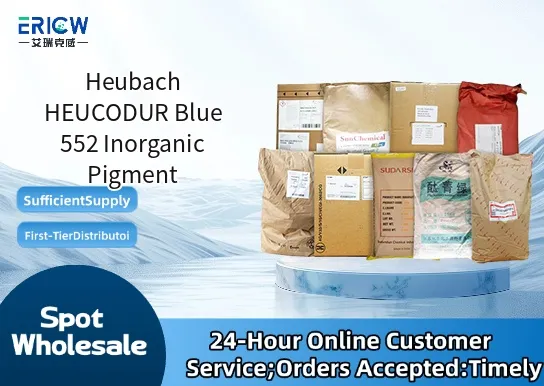
High thermal stability up to 1000 °C, enabling use in high-temperature ceramic and enamel applications.
Excellent chemical resistance against acids, alkalis, and solvents under standard processing conditions.
Consistent batch-to-batch color reproducibility with narrow hue and chroma tolerances.
Non-toxic formulation compliant with EU REACH and RoHS directives for restricted substances.
Optimized particle size distribution for enhanced dispersion and opacity in inorganic matrices.
Ceramic glazes and underglaze decorations for tableware and sanitaryware.
High-performance architectural and industrial enamels on metal substrates.
Colorants for refractory materials and fire-resistant coatings.
Pigmentation of glass frits and low-expansion borosilicate glasses.
Functional coloring in technical plastics requiring thermal and UV stability.
| Chemical Type | Cobalt-aluminium spinel (CoAl₂O₄-based) |
| Product Form | Fine, free-flowing powder |
| Appearance | Intense blue crystalline powder |
| Primary Applications | Ceramics, enamels, glass, refractories |
| Key Features | Thermal stability, acid/alkali resistance, lightfastness |
| Benefits | Color consistency, low volatility at high temperatures, non-bleeding |
| Regulatory Compliance | REACH registered, RoHS compliant, non-VOC |
| Density (g/cm³) | Approx. 3.8–4.1 |
Q1: What is the primary chemical composition of HEUCODUR Blue 552?
A: HEUCODUR Blue 552 is a cobalt-free, spinel-type inorganic pigment based on mixed metal oxides, engineered for high thermal stability and chemical inertness in demanding industrial applications.
Q2: Is HEUCODUR Blue 552 suitable for use in food-contact plastics?
A: Yes — it is formulated to meet global regulatory expectations for pigments in food-contact polymers, including compliance with major food safety frameworks; final suitability depends on full system validation and end-use conditions.
Q3: How does HEUCODUR Blue 552 perform under high-temperature processing conditions?
A: It exhibits excellent thermal stability, retaining color integrity and dispersion quality during standard polymer processing methods such as injection molding, extrusion, and blow molding at temperatures up to 300 °C.
Q4: What types of polymer systems is HEUCODUR Blue 552 typically compatible with?
A: It demonstrates broad compatibility with engineering thermoplastics including polypropylene (PP), polyethylene (PE), polyamide (PA), and thermoplastic elastomers (TPEs), as well as certain high-performance thermosets.
Q5: What is the typical dosage range when using HEUCODUR Blue 552 in plastic compounds?
A: Dosage depends on formulation requirements and desired chroma, but it is generally used at low concentrations — typically ranging from 0.1% to 2% by weight — due to its high intrinsic tinting strength and opacity.
Contact With Us:
E-mail: wangxingqiang@ericwchem.com
Have a Questions? Call Us:
Add:
Building A1, Jiete Industrial Park, Huangpu District, Guangzhou City, Guangdong Province, China