English
 Español
 tiếng việt
 русский
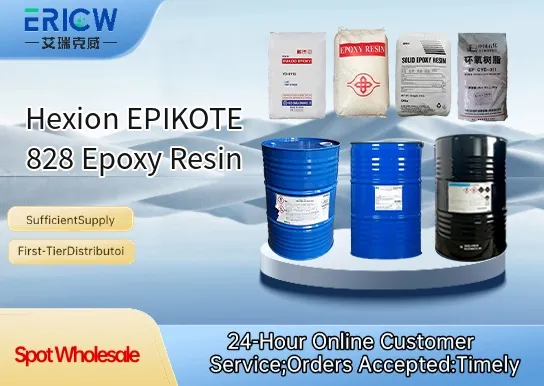
Highly versatile bisphenol-A based liquid epoxy resin with excellent reactivity toward amines and anhydrides.
Consistent low viscosity (10,000–14,000 cP at 25°C) enabling easy handling, mixing, and processing.
Superior mechanical properties including high tensile strength and excellent adhesion to metals and composites.
Outstanding chemical resistance to alkalis, solvents, and moderate acids after full cure.
Proven reliability in demanding industrial formulations requiring reproducible performance and batch-to-batch consistency.
Structural adhesives for aerospace, automotive, and rail transportation assemblies.
Electrical encapsulation and potting compounds for transformers, sensors, and power electronics.
High-performance composite matrices in wind turbine blades and sporting goods.
Protective coatings for marine, oil & gas, and infrastructure applications.
Tooling resins for molds, master models, and casting systems requiring dimensional stability.
| Chemical Type | Bisphenol-A diglycidyl ether (DGEBA) |
| Product Form | Clear to pale yellow viscous liquid |
| Appearance | Homogeneous, transparent liquid, free of gels or sediment |
| Epoxy Equivalent Weight (EEW) | 185–192 g/eq |
| Viscosity at 25°C | 10,000–14,000 cP |
| Chloride Content | ≤ 0.3 wt% |
| Volatiles Content | ≤ 0.2 wt% |
| Primary Applications | Adhesives, composites, coatings, electrical encapsulation |
Q1: What is the typical role of EPIKOTE 828 in epoxy formulations?
A: EPIKOTE 828 serves as a versatile liquid bisphenol-A based epoxy resin, commonly used as the primary resin component in two-component systems. It provides excellent adhesion, chemical resistance, and mechanical strength when cured with appropriate hardeners such as amines or anhydrides.
Q2: Is EPIKOTE 828 suitable for high-performance coatings and composites?
A: Yes — it is widely employed in industrial maintenance coatings, marine topcoats, wind turbine blade matrices, and structural composite laminates due to its balanced reactivity, low viscosity, and ability to deliver high glass transition temperatures and toughness after cure.
Q3: How should EPIKOTE 828 be stored to maintain stability and performance?
A: Store in tightly sealed containers under dry, cool conditions (ideally below 30 °C) and away from moisture, direct sunlight, and strong oxidizing agents. Prolonged exposure to elevated temperatures or humidity may lead to viscosity increase or gelation over time.
Q4: Can EPIKOTE 828 be modified or blended with other resins?
A: Yes — it is frequently blended with reactive diluents, flexibilizers, or other epoxy resins (e.g., novolacs or cycloaliphatics) to tailor viscosity, flexibility, thermal resistance, or cure speed. Compatibility should be verified experimentally for each specific formulation.
Contact With Us:
E-mail: wangxingqiang@ericwchem.com
Have a Questions? Call Us:
Add:
Building A1, Jiete Industrial Park, Huangpu District, Guangzhou City, Guangdong Province, China