English
 Español
 tiếng việt
 русский
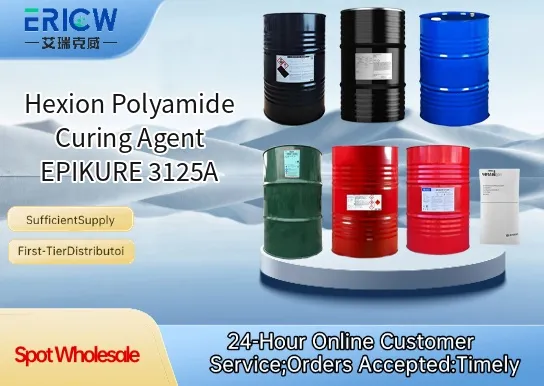
Highly flexible aliphatic polyamide chemistry for improved impact resistance and toughness.
Low viscosity enables excellent wetting of fillers, fibers, and substrates.
Extended pot life at ambient temperatures for improved processing window in large-part fabrication.
Good adhesion to metals, concrete, and composite substrates without surface priming.
Low exotherm during cure minimizes thermal stress and warpage in thick-section castings.
Structural adhesive formulations for automotive and transportation assemblies.
Electrical encapsulants and potting compounds for power electronics and transformers.
Industrial flooring and protective coatings requiring chemical and abrasion resistance.
Composite repair systems for wind turbine blades and marine structures.
Concrete repair mortars and anchoring systems in construction applications.
| Chemical Type | Aliphatic polyamide |
| Product Form | Liquid |
| Appearance | Amber to brown viscous liquid |
| Primary Applications | Epoxy resin curing agent for adhesives, coatings, and composites |
| Key Features | Low viscosity, ambient-cure capability, flexible cured film |
| Benefits | Improved toughness, extended working time, excellent substrate adhesion |
| Storage Stability | 12 months at 20–25°C in unopened original container |
| Compatibility | Standard bisphenol-A and bisphenol-F epoxy resins |
Q1: What is the primary application of EPIKURE 3125A?
A: EPIKURE 3125A is a polyamide-based curing agent designed for use with epoxy resins in high-performance protective coatings, industrial maintenance systems, and corrosion-resistant linings—particularly where flexibility, adhesion to damp or marginally prepared substrates, and extended pot life are required.
Q2: How does EPIKURE 3125A compare to conventional amine curing agents in terms of handling and safety?
A: Compared to aliphatic or aromatic amines, EPIKURE 3125A offers lower volatility, reduced skin sensitization potential, and milder odor—making it more suitable for field-applied coating systems where ventilation may be limited and worker exposure control is a priority.
Q3: What epoxy resin types is EPIKURE 3125A typically compatible with?
A: It is broadly compatible with liquid bisphenol-A and bisphenol-F epoxy resins, as well as solid epoxy dispersions. Compatibility with novolac epoxies or specialty resins should be verified experimentally due to variations in functionality and molecular weight.
Q4: Does EPIKURE 3125A require heat curing, or can it cure at ambient temperatures?
A: EPIKURE 3125A enables full ambient-temperature cure of epoxy systems, though performance properties such as chemical resistance and hardness develop more fully with moderate post-cure (e.g., 24–48 hours at elevated temperature), depending on film thickness and environmental conditions.
Q5: How should EPIKURE 3125A be stored to maintain stability and performance?
A: Store in original sealed containers in a cool, dry place away from direct sunlight and moisture. Prolonged exposure to high humidity or elevated temperatures may lead to viscosity increase or gelation over time; therefore, adherence to recommended shelf life and storage conditions is advised.
Contact With Us:
E-mail: wangxingqiang@ericwchem.com
Have a Questions? Call Us:
Add:
Building A1, Jiete Industrial Park, Huangpu District, Guangzhou City, Guangdong Province, China