English
 Español
 tiếng việt
 русский
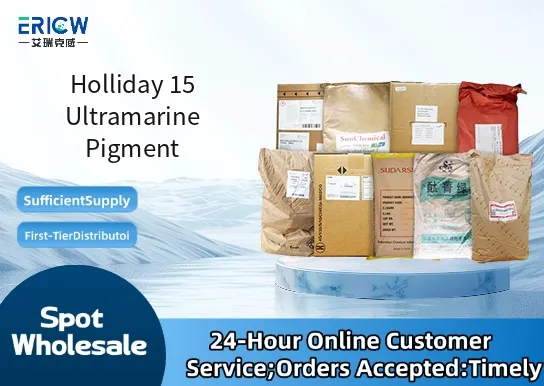
High chromatic strength with intense, clean blue-violet hue ideal for color matching precision.
Excellent lightfastness and thermal stability up to 180°C in polymer processing applications.
Non-toxic, sulfate-free formulation compliant with EN 71-3 and ASTM F963 toy safety standards.
Superior dispersion performance in aqueous and solvent-based systems without flocculation.
Low oil absorption ensures efficient pigment loading and optimal rheology control in coatings and inks.
Architectural and industrial waterborne coatings requiring weather-resistant blue tones.
Plastic coloration for polyolefins, ABS, and PVC in automotive interior components.
Specialty printing inks for packaging films and labels demanding high clarity and gloss retention.
Artist-grade acrylic and gouache paints where batch-to-batch color consistency is critical.
Concrete and stucco colorants for durable, alkali-stable exterior finishes.
| Chemical Type | Sodium aluminosilicate sulfide (synthetic ultramarine) |
| Product Form | Fine dry powder |
| Appearance | Free-flowing, homogeneous blue-violet powder |
| Primary Applications | Coatings, plastics, inks, construction materials, artists’ colors |
| Key Features | Non-toxic, sulfate-free, low oil absorption, excellent dispersibility |
| Benefits | Color consistency, thermal stability, regulatory compliance, ease of incorporation |
| pH (10% aqueous slurry) | 6.8–7.4 |
| Volatile Matter (105°C, 2 hrs) | ≤0.5 wt% |
Q1: What is the primary chemical composition and structural basis of Holliday 15 Ultramarine Pigment?
A: Holliday 15 is a synthetic sodium aluminosilicate pigment with a sodalite-type crystalline structure, incorporating polysulfide anions responsible for its intense blue color. It contains no heavy metals such as lead, cadmium, or chromium, and is chemically distinct from organic dyes or iron oxide pigments.
Q2: Is Holliday 15 suitable for use in food-contact plastics or coatings?
A: Holliday 15 is not certified for direct food-contact applications under global regulatory frameworks such as FDA 21 CFR or EU Plastics Regulation. It may be considered for indirect or non-migrating applications where full regulatory compliance is verified by the end-formulator and supported by appropriate testing and documentation.
Q3: How does Holliday 15 perform under acidic conditions?
A: Ultramarine pigments, including Holliday 15, are sensitive to low pH environments. Prolonged exposure to acids below pH ~5 can cause fading or discoloration due to degradation of the polysulfide chromophores. It is recommended for neutral to mildly alkaline systems and should be avoided in highly acidic formulations without stabilization or encapsulation.
Q4: What is the typical dosage range when using Holliday 15 in industrial coatings or masterbatches?
A: Dosage depends on the desired shade intensity and substrate opacity, but Holliday 15 is generally used at low concentrations—typically ranging from 0.1% to 2% by weight in final formulations. Higher loadings may improve color strength but could affect dispersion stability or rheology in sensitive systems.
Q5: Can Holliday 15 be safely incorporated into PVC compounds without risk of sulfur-related corrosion?
A: While ultramarines contain sulfur in a bound, non-volatile form, caution is advised in high-temperature PVC processing (>180°C) where potential thermal decomposition may release reactive species. Compatibility testing under actual processing conditions—including evaluation of stabilizer interactions—is strongly recommended before full-scale adoption.
Contact With Us:
E-mail: wangxingqiang@ericwchem.com
Have a Questions? Call Us:
Add:
Building A1, Jiete Industrial Park, Huangpu District, Guangzhou City, Guangdong Province, China