English
 Español
 tiếng việt
 русский
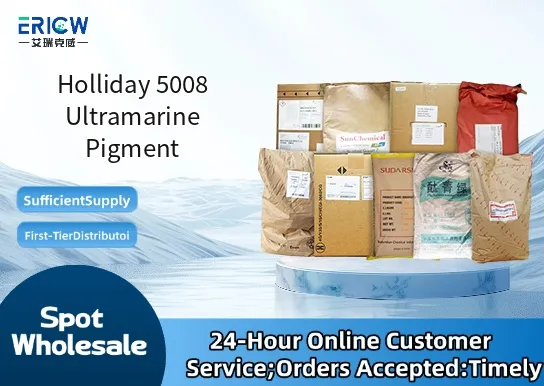
High chroma, intense blue-violet hue with excellent lightfastness and weather resistance.
Non-toxic, sulfate-free formulation compliant with global regulatory standards for consumer-facing applications.
Excellent dispersibility in aqueous and polar organic systems, enabling uniform color development with low grinding energy.
Thermally stable up to 250°C, retaining color integrity during standard polymer processing and ink drying cycles.
Low oil absorption (18–22 g/100 g) supports high pigment loading without compromising viscosity or film integrity.
Architectural and industrial waterborne coatings requiring clean, non-fading blue tones.
Plastic coloration for polyolefins, ABS, and PVC in packaging, consumer goods, and automotive interior components.
Specialty printing inks—including flexographic and gravure—for food-safe labeling and premium packaging.
Artist-grade acrylics, gouaches, and decorative plasters where purity of hue and alkali stability are critical.
Concrete and stucco colorants for architectural precast and EIFS systems.
| Chemical Type | Sodium aluminum silicate sulfide (synthetic ultramarine) |
| Product Form | Fine, free-flowing powder |
| Appearance | Vibrant blue-violet powder with slight violet undertone |
| Primary Applications | Waterborne coatings, plastics, inks, artist materials, construction colorants |
| Key Features | Non-toxic, alkali-stable, sulfate-free, low oil absorption |
| Benefits | Consistent batch-to-batch color, minimal flocculation, easy wetting and dispersion |
| pH (10% aqueous suspension) | 6.2–7.0 |
| Volatile Matter (105°C, 2 hrs) | ≤0.8% |
Q1: What is the primary chemical composition and structural basis of Holliday 5008 Ultramarine Pigment?
A: Holliday 5008 is a synthetic sodium aluminosilicate pigment with a sodalite-type crystal lattice, incorporating polysulfide anions responsible for its intense blue color. It contains no heavy metals such as lead, cadmium, or chromium, and is chemically distinct from organic dyes or inorganic oxides like cobalt blue.
Q2: Is Holliday 5008 suitable for use in heat-sensitive polymer systems, such as low-melt polyolefins or thermoplastic elastomers?
A: Yes — Holliday 5008 exhibits good thermal stability up to approximately 180–200 °C under typical processing conditions, making it appropriate for extrusion and injection molding of common polyolefins and TPEs. Prolonged exposure above 220 °C may lead to gradual color shift due to sulfur species decomposition, so residence time and temperature profiles should be optimized during compounding.
Q3: How does Holliday 5008 perform in acidic environments, such as acid-cured coatings or low-pH aqueous dispersions?
A: Ultramarine pigments, including Holliday 5008, are sensitive to acidic conditions and may undergo hydrolytic degradation, resulting in loss of chroma and potential formation of hydrogen sulfide odor. It is not recommended for use in systems with pH below ~6.5; neutral or slightly alkaline formulations are preferred for optimal stability.
Q4: Can Holliday 5008 be used in food-contact plastics or packaging applications?
A: Holliday 5008 is manufactured to meet general purity requirements for colorants in non-intent-to-contact or indirect food-contact applications, subject to final formulation compliance and regulatory review by the end-user. It is not pre-approved for direct food contact under major global frameworks, and suitability must be confirmed case-by-case based on migration testing and applicable local regulations.
Contact With Us:
E-mail: wangxingqiang@ericwchem.com
Have a Questions? Call Us:
Add:
Building A1, Jiete Industrial Park, Huangpu District, Guangzhou City, Guangdong Province, China