English
 Español
 tiếng việt
 русский
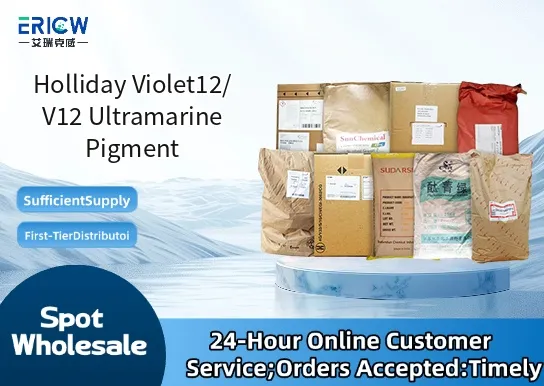
High chroma violet shade with exceptional color purity and brightness.
Excellent thermal stability up to 250°C, suitable for medium-temperature processing.
Good lightfastness and weather resistance in non-acidic systems.
Low water solubility and minimal migration in polymer matrices.
Consistent particle size distribution ensuring uniform dispersion and batch-to-batch reproducibility.
Plastics: Polyolefins, PVC, PS, and engineering thermoplastics.
Pigment dispersions for industrial coatings and architectural paints.
Inks: Offset, flexographic, and screen printing inks for packaging.
Masterbatches for color concentrate production.
Construction materials: Colored concrete, stucco, and dry-mix mortars.
| Chemical Type | Sodium aluminosilicate sulfur complex (Ultramarine) |
| Product Form | Fine dry powder |
| Appearance | Violet-blue crystalline powder |
| Primary Applications | Plastics, coatings, inks, construction materials |
| Key Features | Non-toxic, sulfate-free, heavy-metal-free |
| Benefits | Easy dispersion, high tinting strength, pH-stable above 4.5 |
| Recommended pH Range | pH ≥ 4.5 (avoid strong acids) |
| Storage Conditions | Store in cool, dry place away from moisture and acidic vapors |
Q1: What is the primary chemical composition of Holliday Violet12/V12?
A: Holliday Violet12/V12 is a synthetic ultramarine pigment based on a complex sodium aluminosilicate matrix, with sulfur-containing chromophores responsible for its characteristic violet hue. It contains no heavy metals and is free from cadmium, lead, or chromium.
Q2: Is V12 suitable for use in polyolefin compounds such as PP and HDPE?
A: Yes — Holliday Violet12/V12 exhibits excellent thermal stability and dispersibility in polyolefins. It maintains color integrity during standard extrusion and injection molding processes, and shows minimal plate-out tendency under typical processing conditions.
Q3: How does V12 perform in alkaline environments, such as cementitious systems or high-pH coatings?
A: As an ultramarine-based pigment, V12 demonstrates good resistance to alkaline media and is commonly used in architectural coatings, stucco, and dry-mix mortars where pH values exceed 10. However, prolonged exposure to strong acids or highly reducing conditions may affect hue stability.
Q4: Can V12 be used in food-contact plastics?
A: Holliday Violet12/V12 is not certified for direct food-contact applications under current global regulatory frameworks. While it meets general safety requirements for industrial plastics, formal food-contact compliance requires specific migration testing and regulatory review per jurisdiction and end-use conditions.
Contact With Us:
E-mail: wangxingqiang@ericwchem.com
Have a Questions? Call Us:
Add:
Building A1, Jiete Industrial Park, Huangpu District, Guangzhou City, Guangdong Province, China