English
 Español
 tiếng việt
 русский
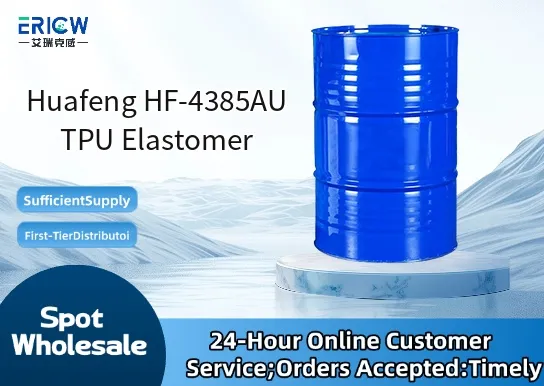
Excellent abrasion resistance for extended service life in demanding mechanical environments.
Outstanding low-temperature flexibility down to –30 °C without significant loss of elasticity.
Good oil and grease resistance, maintaining dimensional stability during exposure to hydrocarbon-based fluids.
High melt processability suitable for extrusion, injection molding, and blow molding operations.
Excellent transparency and clarity with minimal yellowing after thermal aging.
Automotive interior trim components including instrument panel overlays and soft-touch surfaces.
Medical tubing and fluid-handling devices requiring biocompatibility and kink resistance.
High-performance sporting goods such as ski boot cuffs, bicycle grips, and protective gear linings.
Industrial hoses and pneumatic connectors where flexibility and pressure retention are critical.
Consumer electronics casings and wearable device bands requiring skin-friendly tactile properties.
| Chemical Type | Aliphatic polyester-based thermoplastic polyurethane |
| Product Form | Pellets |
| Appearance | Translucent, off-white granules |
| Density (g/cm³) | 1.18–1.20 |
| Melt Flow Index (210 °C/2.16 kg, g/10 min) | 10–14 |
| Shore A Hardness | 85 ± 2 |
| Tensile Strength (MPa) | 32–36 |
| Elongation at Break (%) | 550–620 |
Q1: What are the key processing advantages of HF-4385AU compared to conventional TPU grades?
A: HF-4385AU offers enhanced melt flow stability and reduced torque demand during extrusion and injection molding, enabling smoother processing at lower temperatures and shorter cycle times—particularly beneficial for thin-walled or highly detailed parts.
Q2: Is HF-4385AU suitable for applications requiring high abrasion resistance and flexibility at low temperatures?
A: Yes—HF-4385AU delivers excellent balance between toughness and low-temperature flexibility, with retained elongation and impact resilience down to –30 °C, making it well-suited for dynamic sealing, wearable components, and outdoor industrial hoses.
Q3: Can HF-4385AU be used in overmolding applications with common engineering thermoplastics?
A: HF-4385AU demonstrates good interfacial adhesion when overmolded onto substrates such as ABS, PC, and PP, provided appropriate mold temperature control and surface preparation are applied. Bond strength is optimized when processing near the upper end of its recommended melt temperature range.
Q4: How does HF-4385AU perform under prolonged UV exposure and outdoor weathering?
A: While not inherently UV-stabilized, HF-4385AU exhibits moderate resistance to yellowing and surface embrittlement. For extended outdoor service life, integration of HALS-type stabilizers and UV absorbers into the final compound is strongly recommended.
Contact With Us:
E-mail: wangxingqiang@ericwchem.com
Have a Questions? Call Us:
Add:
Building A1, Jiete Industrial Park, Huangpu District, Guangzhou City, Guangdong Province, China