English
 Español
 tiếng việt
 русский
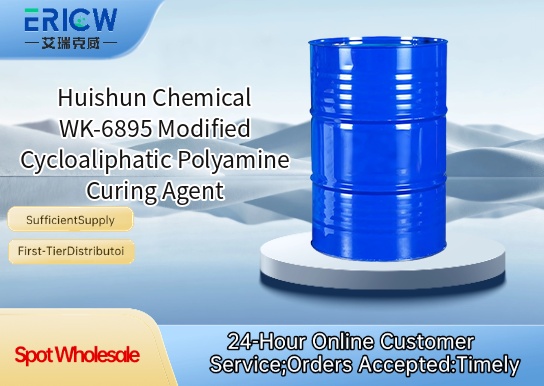
Enhanced pot life and reduced exotherm versus conventional aliphatic amines, enabling safer large-volume casting and thick-section applications.
Excellent chemical resistance—particularly to alkalis, solvents, and mild acids—after full cure with epoxy resins.
Superior adhesion to concrete, steel, and composite substrates without mandatory surface priming.
Low viscosity (250–450 mPa·s at 25°C) for easy metering, mixing, and air-release in demanding formulation systems.
Improved UV stability and reduced amine blush tendency compared to standard cycloaliphatic amines.
High-performance epoxy flooring and industrial coatings for pharmaceutical and food processing facilities.
Structural adhesive formulations requiring rapid development of handling strength and long-term durability.
Electrical encapsulation and potting compounds for transformers, sensors, and power electronics.
Wind turbine blade bonding and composite repair systems demanding low shrinkage and thermal cycling resistance.
Marine and offshore protective coatings where corrosion resistance and wet-surface cure capability are critical.
| Chemical Type | Modified cycloaliphatic polyamine |
| Product Form | Liquid |
| Appearance | Clear, pale yellow to amber liquid |
| Primary Applications | Epoxy resin curing agent for coatings, adhesives, and composites |
| Key Features | Extended pot life, low blush, high Tg potential, good hydrolytic stability |
| Benefits | Improved worker safety, reduced post-cure defects, enhanced substrate compatibility |
| Density (25°C) | 0.92–0.96 g/cm³ |
| Amine Value | 380–420 mg KOH/g |
Contact With Us:
E-mail: wangxingqiang@ericwchem.com
Have a Questions? Call Us:
Add:
Building A1, Jiete Industrial Park, Huangpu District, Guangzhou City, Guangdong Province, China