English
 Español
 tiếng việt
 русский
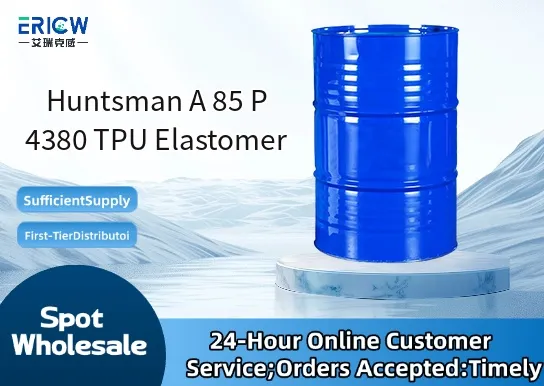
Excellent abrasion resistance for demanding mechanical service environments.
High tensile strength and elongation at break, enabling robust performance under dynamic stress.
Good low-temperature flexibility down to –30 °C, maintaining elasticity in cold conditions.
Outstanding oil and grease resistance, suitable for contact with hydrocarbon-based fluids.
Processable via standard thermoplastic methods including extrusion, injection molding, and calendering.
Industrial rollers and conveyor belts requiring wear resilience and dimensional stability.
Automotive interior trim components such as gear knobs, steering wheel covers, and soft-touch surfaces.
High-performance hoses and tubing for pneumatic and hydraulic systems.
Footwear midsoles and outsoles where rebound, comfort, and durability are critical.
Medical device tubing and grips needing biocompatibility support and tactile softness.
| Chemical Type | Aliphatic polyester-based thermoplastic polyurethane (TPU) |
| Product Form | Pellets |
| Appearance | Off-white to light tan, free-flowing granules |
| Hardness (Shore A) | 85 ± 2 |
| Density (g/cm³) | 1.18–1.20 |
| Melt Flow Index (230 °C/2.16 kg) | 10–14 g/10 min |
| Primary Applications | Extruded profiles, molded parts, flexible tubing, industrial wear components |
| Key Features | Abrasion resistance, oil resistance, low-temperature flexibility, melt processability |
Q1: What is the primary function of A 85 P 4380 in TPU formulations?
A: A 85 P 4380 is a polymeric processing aid designed to enhance melt flow, reduce extrusion pressure, and improve surface finish in thermoplastic polyurethane (TPU) compounds—particularly during high-speed calendering, film blowing, and profile extrusion.
Q2: Is A 85 P 4380 compatible with all common TPU chemistries (e.g., polyester- and polyether-based)?
A: Yes, A 85 P 4380 demonstrates broad compatibility across aromatic and aliphatic, polyester- and polyether-based TPUs. It is typically incorporated via masterbatch or dry-blend methods and remains stable under standard TPU processing temperatures.
Q3: How does A 85 P 4380 affect mechanical properties such as tensile strength or elongation at break?
A: When used within recommended dosage ranges, A 85 P 4380 has minimal impact on key mechanical properties. It is formulated to preserve TPU’s inherent elasticity and toughness while optimizing processability—no significant reduction in tensile strength, tear resistance, or elongation is observed under typical conditions.
Q4: Can A 85 P 4380 be used in applications requiring regulatory compliance for food contact or medical devices?
A: A 85 P 4380 is not pre-approved for direct food-contact or medical applications. Customers intending such use must conduct full regulatory evaluation—including extractables testing and formulation-level compliance assessment—as suitability depends on final product configuration, processing history, and applicable regional requirements.
Contact With Us:
E-mail: wangxingqiang@ericwchem.com
Have a Questions? Call Us:
Add:
Building A1, Jiete Industrial Park, Huangpu District, Guangzhou City, Guangdong Province, China