English
 Español
 tiếng việt
 русский
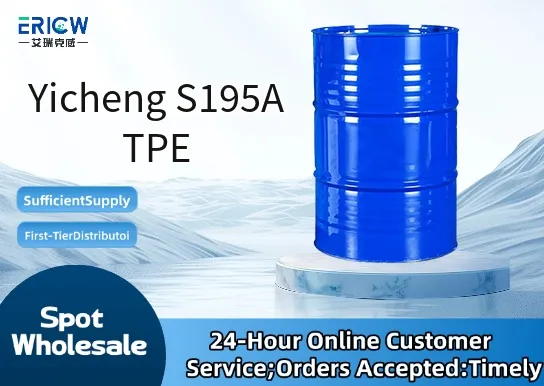
Excellent elasticity and recovery performance across a wide temperature range (−40 °C to +80 °C).
Good processability via injection molding, extrusion, and overmolding onto PP, PS, ABS, and PC substrates.
Low odor and compliant with RoHS and REACH regulations for restricted substances.
Superior soft-touch feel with邵氏 A hardness of 95A, offering enhanced user comfort in contact applications.
Outstanding resistance to UV degradation and long-term aging under ambient indoor conditions.
Soft-grip handles for power tools and hand-held appliances.
Sealing rings and gaskets for household appliances and fluid-handling components.
Overmolded buttons and control interfaces in consumer electronics.
Flexible tubing and protective sheathing in low-pressure pneumatic systems.
Ergonomic grips for medical devices requiring frequent cleaning and sterilization compatibility.
| Chemical Type | Thermoplastic Elastomer (TPE-SEBS based) |
| Product Form | Pellets |
| Appearance | Off-white, free-flowing granules |
| Shore A Hardness | 95 ± 2 A |
| Density | 0.90 g/cm³ (ASTM D792) |
| Melt Flow Rate (200 °C/5 kg) | 6–8 g/10 min |
| Primary Applications | Overmolding, soft-touch components, seals & gaskets |
| Key Features | Elastic recovery, substrate adhesion, low volatility |
Q1: What is the primary application category for Yicheng S195A TPE?
A: Yicheng S195A TPE is primarily formulated for soft-touch overmolding and functional elastomeric components in consumer goods, automotive interiors, and handheld device grips—where balanced processability, surface aesthetics, and tactile performance are critical.
Q2: Is Yicheng S195A TPE compatible with common thermoplastics used in two-shot molding?
A: Yes, it exhibits good adhesion to polypropylene (PP), polyethylene (PE), and ABS substrates without requiring primers or surface treatment under standard injection molding conditions—though optimal bonding depends on mold design, processing parameters, and substrate cleanliness.
Q3: What are the key processing advantages of Yicheng S195A TPE compared to conventional TPEs?
A: It offers enhanced melt flow stability at lower shear rates, reduced post-molding shrinkage, and improved thermal recovery after compression—making it especially suitable for thin-walled, high-detail parts and applications requiring consistent dimensional repeatability across production runs.
Q4: Does Yicheng S195A TPE contain halogens or heavy metals?
A: No, it is formulated without intentionally added halogens, lead, cadmium, mercury, or hexavalent chromium, and is designed to meet general requirements for RoHS-compliant and eco-conscious manufacturing environments.
Q5: How should Yicheng S195A TPE be dried prior to processing?
A: It is recommended to dry the material at 60–70 °C for 2–4 hours using a desiccant dryer; moisture content should be maintained below 0.05% to prevent surface defects and maintain mechanical integrity during processing.
Contact With Us:
E-mail: wangxingqiang@ericwchem.com
Have a Questions? Call Us:
Add:
Building A1, Jiete Industrial Park, Huangpu District, Guangzhou City, Guangdong Province, China