English
 Español
 tiếng việt
 русский
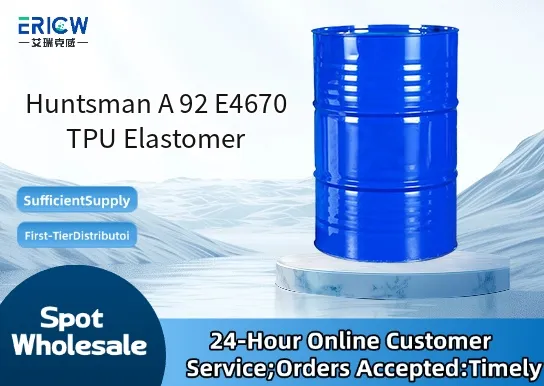
Excellent melt processability for high-speed extrusion and injection molding.
Outstanding abrasion resistance and mechanical toughness at ambient and elevated temperatures.
Good hydrolytic stability, especially in humid or warm environments.
High transparency and clarity in thin-gauge molded or extruded parts.
Compatible with common engineering thermoplastics for co-processing and alloying.
Medical tubing and fluid delivery systems requiring biocompatibility support.
High-performance automotive interior trim and soft-touch overlays.
Consumer electronics protective casings and flexible hinges.
Industrial hoses and pneumatic seals demanding resilience and fatigue resistance.
Footwear midsoles and performance outsoles requiring energy return and durability.
| Chemical Type | Aliphatic polyester-based thermoplastic polyurethane (TPU) |
| Product Form | Pellets |
| Appearance | Translucent, free-flowing granules |
| Primary Applications | Extrusion, injection molding, blow molding |
| Key Features | Melt-processable, hydrolysis-resistant, optically clear |
| Benefits | Reduced cycle times, excellent surface finish, low extractables |
| Processing Temperature Range | 180–220 °C (recommended barrel zone) |
| Storage Conditions | Store in original sealed packaging at <25 °C and <50% RH |
Q1: What is the primary application profile for A 92 E4670?
A: A 92 E4670 is a thermoplastic polyurethane (TPU) elastomer engineered for demanding extrusion and injection molding applications—particularly in high-performance automotive interior components, industrial hoses, and flexible technical profiles requiring excellent abrasion resistance, low-temperature flexibility, and consistent melt processability.
Q2: How does A 92 E4670 differ from standard polyester- or polyether-based TPUs?
A: A 92 E4670 is a proprietary aromatic polyester TPU offering a balanced combination of mechanical strength, thermal stability, and hydrolytic resistance—superior to many conventional polyester TPUs while maintaining better UV stability than typical aliphatic grades. Its molecular architecture is optimized for consistent flow behavior and minimal plate-out during extended processing runs.
Q3: Is A 92 E4670 suitable for use in food-contact or medical-related applications?
A: A 92 E4670 is not pre-certified for direct food-contact or medical device applications. While it meets general regulatory requirements for polymer constituents under major global frameworks, end-use compliance depends on full formulation evaluation—including additives, processing conditions, and final article testing—per applicable regional regulations.
Q4: What drying and processing recommendations apply to A 92 E4670?
A: Prior to processing, A 92 E4670 should be dried to a moisture content below 0.05% using desiccant drying at 80–90 °C for 2–4 hours. Melt processing temperatures typically range between 180–220 °C, with barrel residence time minimized to preserve thermal stability and avoid discoloration or viscosity drift.
Contact With Us:
E-mail: wangxingqiang@ericwchem.com
Have a Questions? Call Us:
Add:
Building A1, Jiete Industrial Park, Huangpu District, Guangzhou City, Guangdong Province, China