English
 Español
 tiếng việt
 русский
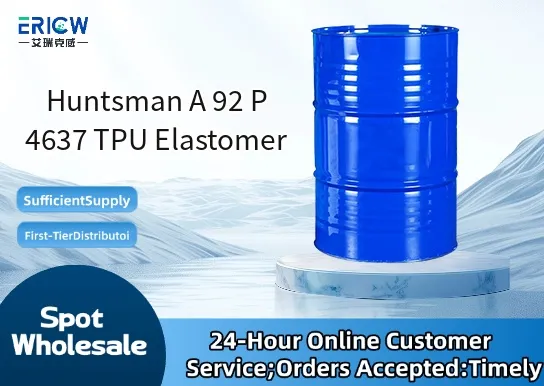
Excellent abrasion resistance for demanding mechanical service environments.
High tensile strength and elongation at break, enabling robust performance under dynamic stress.
Good low-temperature flexibility down to –30 °C, supporting reliable operation in cold climates.
Processable via standard thermoplastic methods including extrusion, injection molding, and calendering.
Hydrolysis-resistant formulation suitable for humid or wet-condition applications.
Industrial hoses and tubing requiring high flex life and chemical resilience.
Automotive interior trim components, including soft-touch surfaces and gaskets.
Conveyor belts and drive belts in material handling systems.
Footwear midsoles and outsoles where energy return and wear resistance are critical.
Medical device tubing and seals compatible with ISO 10993–compatible processing conditions.
| Chemical Type | Aliphatic polyester-based thermoplastic polyurethane (TPU) |
| Product Form | Pellets |
| Appearance | Off-white to light tan, free-flowing granules |
| Primary Applications | Extruded profiles, molded parts, flexible tubing, industrial belting |
| Key Features | Abrasion resistance, hydrolytic stability, melt processability |
| Benefits | Extended service life, consistent processing, reduced downtime |
| Density (g/cm³) | 1.18–1.22 (ASTM D792) |
| Melt Flow Index (g/10 min) | 10–14 (210 °C / 5 kg, ASTM D1238) |
Q1: What is the primary function of A 92 P 4637 in thermoplastic polyurethane formulations?
A: A 92 P 4637 is a high-performance chain extender specifically designed to enhance mechanical strength, thermal stability, and melt processability in aromatic TPU systems. It reacts with isocyanate-terminated prepolymers to build molecular weight and improve elastomeric integrity.
Q2: Is A 92 P 4637 suitable for use in medical or food-contact TPU applications?
A: While A 92 P 4637 is not inherently certified for direct food contact or implantable medical devices, it may be considered for certain non-invasive medical tubing or packaging components when formulated and processed under strict quality controls. Final regulatory compliance depends on full system validation by the compounder or end-user.
Q3: How does A 92 P 4637 compare to conventional diamine chain extenders in terms of processing behavior?
A: Unlike highly reactive aliphatic diamines, A 92 P 4637 offers moderated reactivity and improved pot life during melt processing, enabling better extrusion and injection molding consistency. Its solid crystalline form also supports precise feeding and reduced dust generation compared to liquid alternatives.
Q4: What are recommended storage conditions to maintain product stability?
A: Store in original sealed containers under cool, dry conditions—ideally below 25 °C and with low humidity. Avoid prolonged exposure to ambient moisture or elevated temperatures, as this may affect crystallinity and handling characteristics over time.
Contact With Us:
E-mail: wangxingqiang@ericwchem.com
Have a Questions? Call Us:
Add:
Building A1, Jiete Industrial Park, Huangpu District, Guangzhou City, Guangdong Province, China