English
 Español
 tiếng việt
 русский
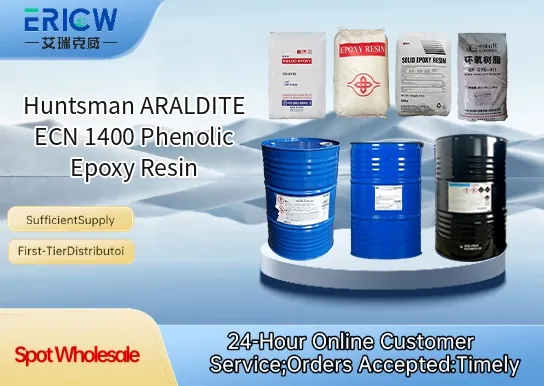
High thermal stability enabled by phenolic novolac backbone for sustained performance above 180 °C.
Exceptional chemical resistance to strong acids, alkalis, and solvents in aggressive industrial environments.
Low viscosity formulation facilitates excellent impregnation of carbon and glass fiber reinforcements.
High crosslink density delivers superior mechanical strength and dimensional stability under thermal cycling.
Designed for high-gloss, low-shrinkage cured surfaces ideal for precision composite tooling and aerospace molds.
Aerospace composite tooling, including autoclave-cured mandrels and layup molds.
High-performance electrical laminates requiring arc resistance and CTI > 600 V.
Structural adhesives for metal-to-composite bonding in rail and wind energy components.
Encapsulation and potting of high-voltage power electronics operating at elevated temperatures.
Carbon fiber prepregs for demanding motorsport and defense applications.
| Chemical Type | Phenolic Novolac Epoxy Resin |
| Product Form | Amber to light brown viscous liquid |
| Appearance | Clear to slightly hazy, homogeneous liquid |
| Epoxy Equivalent Weight (EEW) | 175–190 g/eq |
| Viscosity at 25 °C | 8,000–12,000 mPa·s |
| Chlorine Content | < 1,000 ppm |
| Primary Applications | High-temp composites, electrical insulation, structural adhesives |
| Key Features | Thermal stability, chemical resistance, low shrinkage, high Tg |
Q1: What is the primary functional advantage of ARALDITE ECN 1400 compared to standard bisphenol-A epoxy resins?
A: ARALDITE ECN 1400 is a phenolic novolac-based epoxy resin offering significantly enhanced thermal stability, chemical resistance—particularly to strong acids and solvents—and higher crosslink density after curing. Its multi-epoxy functionality supports superior performance in demanding high-temperature and corrosive environments.
Q2: Which types of curing agents are typically recommended for use with ECN 1400?
A: ECN 1400 is commonly cured with aromatic amines (e.g., DDS, DDM), anhydrides (e.g., nadic methyl anhydride, hexahydrophthalic anhydride), or phenolic resins. Selection depends on the target balance of glass transition temperature, pot life, and mechanical properties—amine systems generally yield higher Tg and thermal resistance.
Q3: Is ECN 1400 suitable for applications requiring compliance with food contact regulations?
A: ECN 1400 is not inherently compliant with global food contact regulations. Formulators must validate final cured system compliance through full migration testing and regulatory review, as suitability depends on the complete formulation—including curing agent, additives, and processing conditions.
Q4: How does ECN 1400 perform in high-humidity or wet-service environments after cure?
A: When fully cured with appropriate hardeners, ECN 1400 exhibits excellent moisture resistance and low water absorption due to its highly crosslinked, hydrophobic network—making it well-suited for coatings and composites exposed to humid, marine, or immersion conditions.
Contact With Us:
E-mail: wangxingqiang@ericwchem.com
Have a Questions? Call Us:
Add:
Building A1, Jiete Industrial Park, Huangpu District, Guangzhou City, Guangdong Province, China