English
 Español
 tiếng việt
 русский
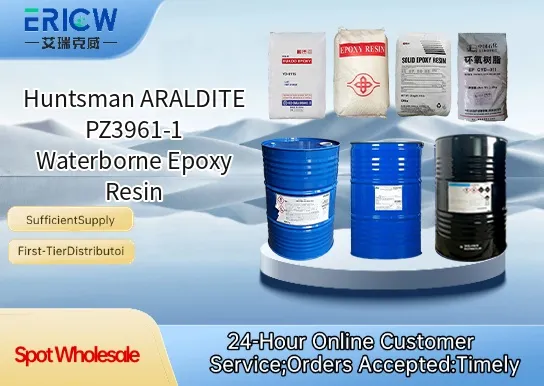
Low-VOC, water-based formulation compliant with stringent environmental and occupational health regulations.
Excellent adhesion to metals, concrete, and primed substrates without requiring aggressive surface preparation.
Good chemical resistance to alkalis, mild acids, and solvents after full cure.
Stable dispersion with low viscosity for easy handling, spray application, and compatibility with common co-resins.
Enables high-solids, low-odor coatings systems suitable for indoor and confined-space applications.
Waterborne epoxy primers and mid-coats for industrial steel structures and infrastructure.
Concrete floor coatings and protective linings in food processing, pharmaceutical, and cleanroom facilities.
High-performance maintenance coatings for marine and offshore assets requiring low-emission solutions.
Hybrid binder systems in eco-friendly anticorrosive coatings for automotive underbody and chassis protection.
Base resin for formulating low-VOC, two-component waterborne epoxy topcoats and sealers.
| Chemical Type | Waterborne bisphenol-A based epoxy dispersion |
| Product Form | Liquid dispersion |
| Appearance | Opaque white to off-white liquid |
| Solids Content (wt%) | 50–54% |
| pH (at 25°C) | 7.0–8.5 |
| Viscosity (mPa·s, Brookfield RVT, Spindle #3, 20 rpm, 25°C) | 1,500–3,500 |
| Density (g/cm³, 25°C) | 1.08–1.12 |
| Free Bisphenol-A Content | <0.01% (compliant with EU REACH SVHC criteria) |
Q1: What is the primary function of ARALDITE PZ3961-1 in waterborne coating systems?
A: ARALDITE PZ3961-1 is a waterborne epoxy resin designed to serve as a reactive crosslinker or modifier in aqueous acrylic, polyurethane, or hybrid dispersions—enhancing chemical resistance, adhesion, and mechanical durability without requiring organic solvents.
Q2: Can PZ3961-1 be used in direct-to-metal (DTM) coatings for industrial maintenance applications?
A: Yes—PZ3961-1 is formulated to support high-performance DTM coatings where corrosion protection, wet adhesion, and compatibility with common pigments and inhibitors are critical. It enables low-VOC formulations while maintaining robust intercoat adhesion and substrate bonding on steel and aluminum.
Q3: How does PZ3961-1 differ from conventional solvent-based epoxy resins in terms of processing and storage?
A: Unlike solvent-based epoxies, PZ3961-1 is supplied as a stable aqueous dispersion, eliminating flammability hazards and reducing ventilation requirements during handling. It remains stable under typical ambient storage conditions but should be protected from freezing and prolonged exposure to elevated temperatures above 40 °C.
Q4: Is PZ3961-1 compatible with common amine-based hardeners used in waterborne epoxy systems?
A: PZ3961-1 is specifically engineered to react efficiently with aliphatic and cycloaliphatic polyamine dispersions. Compatibility and cure performance depend on pH, mixing sequence, and the selected hardener’s particle size and amine value—formulators are advised to conduct small-scale compatibility and pot-life testing prior to scale-up.
Contact With Us:
E-mail: wangxingqiang@ericwchem.com
Have a Questions? Call Us:
Add:
Building A1, Jiete Industrial Park, Huangpu District, Guangzhou City, Guangdong Province, China