English
 Español
 tiếng việt
 русский
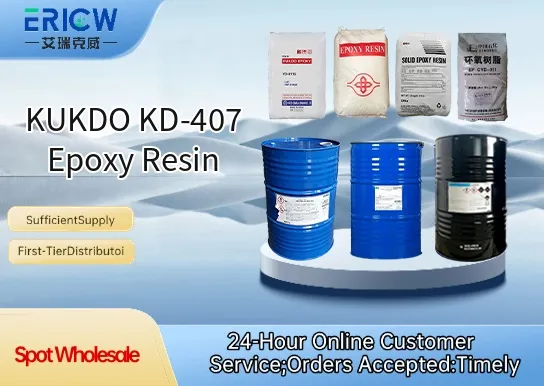
High reactivity with amine and anhydride curing agents for rapid gelation and short cycle times.
Excellent adhesion to metals, composites, and cured epoxy substrates without primer.
Low viscosity (12,000–14,000 cP at 25°C) enabling easy processing, impregnation, and air release.
Good chemical resistance to alkalis, solvents, and diluted acids after full cure.
Consistent batch-to-batch performance with strict quality control per ISO 9001 manufacturing standards.
Structural adhesive formulations for automotive and aerospace bonding.
Matrix resin in fiber-reinforced composites for wind turbine blades and marine laminates.
Electrical encapsulation and potting compounds for high-voltage insulators and power electronics.
Coating systems for corrosion protection of steel infrastructure and offshore equipment.
Tooling resins for low-temperature mold making and composite part replication.
| Chemical Type | Diglycidyl ether of bisphenol-A (DGEBA) |
| Product Form | Liquid |
| Appearance | Clear, pale yellow viscous liquid |
| Epoxy Equivalent Weight (EEW) | 185–195 g/eq |
| Viscosity (25°C) | 12,000–14,000 cP |
| Chlorine Content | ≤ 700 ppm |
| Softening Point | Not applicable (liquid at room temperature) |
| Storage Stability | 12 months at ≤ 25°C in sealed containers |
Q1: What is the primary functional role of KD-407 in epoxy formulations?
A: KD-407 is a reactive liquid diluent designed to reduce viscosity and improve processability of standard bisphenol-A or bisphenol-F based epoxy resins without significantly compromising crosslink density or thermal performance.
Q2: Is KD-407 suitable for high-gloss, low-VOC coating systems?
A: Yes — as a reactive diluent, KD-407 becomes part of the polymer network during cure, contributing to VOC reduction while maintaining film integrity, hardness, and chemical resistance typical of high-performance epoxy coatings.
Q3: How does KD-407 compare to non-reactive diluents in terms of final film properties?
A: Unlike solvent-based or non-reactive diluents, KD-407 participates in the curing reaction, helping preserve mechanical strength, adhesion, and long-term durability — especially under thermal or humid service conditions.
Q4: What is the typical dosage range for KD-407 in standard epoxy formulations?
A: Dosage is formulation-dependent, but KD-407 is generally used at low concentrations — typically ranging from 0.1% to 2% by weight relative to the base epoxy resin — to achieve optimal viscosity reduction without adversely affecting reactivity or cured properties.
Contact With Us:
E-mail: wangxingqiang@ericwchem.com
Have a Questions? Call Us:
Add:
Building A1, Jiete Industrial Park, Huangpu District, Guangzhou City, Guangdong Province, China