English
 Español
 tiếng việt
 русский
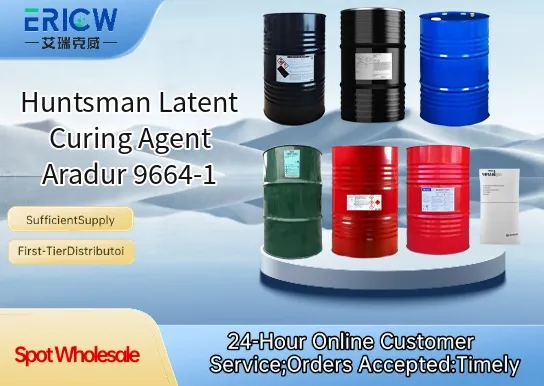
Latent at room temperature — enables extended pot life and ambient handling without premature gelation.
Activates rapidly upon thermal cure (typically 120–160 °C), delivering efficient crosslinking with epoxy resins.
Halogen-free formulation — supports compliance with RoHS, REACH, and modern environmental safety standards.
Excellent storage stability — remains chemically inert for ≥12 months when stored under recommended conditions.
Yields high-gloss, low-color cured films with superior mechanical strength and chemical resistance.
Electrical encapsulation and potting compounds for power electronics and EV battery modules.
High-performance powder coatings for automotive and architectural metal substrates.
Prepregs and composite matrices in aerospace and wind energy structural components.
Adhesives and bonding agents requiring precise thermal activation and minimal outgassing.
Structural casting resins for industrial tooling and precision engineering parts.
| Chemical Type | Dicyandiamide (DICY)-based latent hardener |
| Product Form | Free-flowing white to off-white crystalline powder |
| Appearance | Crystalline solid, free of visible impurities |
| Primary Applications | Epoxy resin systems requiring thermal latency and controlled reactivity |
| Key Features | Low dust generation, excellent dispersibility in epoxy melts |
| Benefits | Reduced VOC emissions, improved worker safety, consistent batch-to-batch performance |
| Storage Conditions | Store in original sealed container at ≤25 °C, protected from moisture |
| Shelf Life | ≥12 months under recommended storage conditions |
Q1: What is the primary function of Aradur 9664-1 in epoxy formulations?
A: Aradur 9664-1 is a latent amine-based curing agent designed to provide extended pot life at ambient temperatures while enabling rapid, efficient crosslinking upon thermal activation—typically above 120 °C. It supports high-performance thermoset formation with excellent mechanical and chemical resistance.
Q2: How does Aradur 9664-1 compare to conventional aromatic amine hardeners in terms of handling and safety?
A: Unlike many reactive aromatic amines, Aradur 9664-1 exhibits low volatility and significantly reduced skin sensitization potential due to its latent, sterically hindered structure. It is formulated for improved workplace handling and offers greater formulation stability without requiring stringent moisture exclusion during storage.
Q3: What types of epoxy resins is Aradur 9664-1 compatible with?
A: Aradur 9664-1 demonstrates broad compatibility with standard DGEBA-type epoxy resins, novolac epoxies, and multifunctional epoxy oligomers. Performance may vary depending on resin functionality and molecular weight, so preliminary compatibility and cure profiling are recommended for each specific system.
Q4: Can Aradur 9664-1 be used in applications requiring FDA compliance or food-contact approval?
A: Aradur 9664-1 is not pre-approved for direct food-contact applications under FDA or equivalent regulatory frameworks. Its suitability for such uses must be evaluated case-by-case based on final cured-article testing, intended conditions of use, and applicable local regulations—formulators should consult Huntsman technical support for guidance on qualification pathways.
Q5: What is the typical dosage range for Aradur 9664-1 in standard epoxy systems?
A: Dosage depends on the epoxy resin’s epoxide equivalent weight and desired cure profile, but Aradur 9664-1 is typically used at low concentrations—generally ranging from 0.1% to 2% by weight relative to the resin. Optimal levels should be determined experimentally to balance latency, gel time, and final properties.
Contact With Us:
E-mail: wangxingqiang@ericwchem.com
Have a Questions? Call Us:
Add:
Building A1, Jiete Industrial Park, Huangpu District, Guangzhou City, Guangdong Province, China