English
 Español
 tiếng việt
 русский
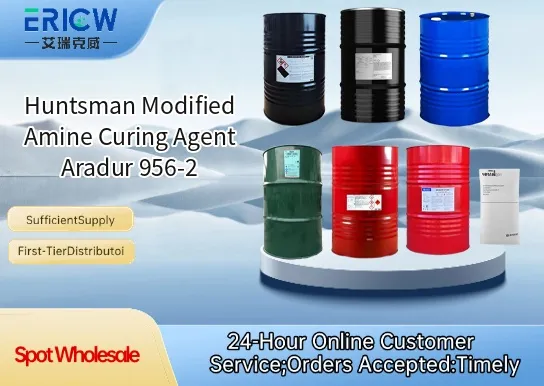
Low-viscosity liquid enabling easy handling and homogeneous mixing with epoxy resins.
Room-temperature curing capability with balanced reactivity and extended pot life.
Excellent adhesion to metals, concrete, and composite substrates.
Improved chemical resistance, particularly to alkalis and solvents, in cured systems.
Low color and low volatility, supporting high-gloss finishes and reduced VOC emissions.
Structural adhesives for aerospace and automotive bonding.
High-performance flooring and protective coatings for industrial facilities.
Electrical encapsulation and potting compounds for power electronics.
Composite matrix resins in wind turbine blade manufacturing.
Repair mortars and grouts for infrastructure rehabilitation.
| Chemical Type | Modified aliphatic amine |
| Product Form | Liquid |
| Appearance | Pale yellow to amber clear liquid |
| Primary Applications | Epoxy resin curing agent for adhesives, coatings, and composites |
| Key Features | Room-temperature cure, low viscosity, low odor |
| Benefits | Good mechanical properties, excellent substrate wetting, improved flexibility vs. standard amines |
| Storage Stability | Stable under dry, cool conditions (15–25°C) for ≥12 months in sealed containers |
| Compatibility | Compatible with standard DGEBA and novolac epoxy resins |
Q1: What is the primary function of Aradur 956-2 in epoxy systems?
A: Aradur 956-2 is a modified amine curing agent designed to provide efficient room-temperature or elevated-temperature cure of epoxy resins, delivering good mechanical properties, chemical resistance, and reduced amine blush compared to conventional aliphatic amines.
Q2: Is Aradur 956-2 suitable for applications requiring low viscosity and extended pot life?
A: Yes — as a modified amine, Aradur 956-2 offers lower volatility and higher molecular weight than standard aliphatic amines, contributing to improved handling characteristics, reduced odor, and a more workable pot life under typical formulation conditions.
Q3: How does Aradur 956-2 compare to standard DETA or DEEA in terms of reactivity and surface appearance?
A: Aradur 956-2 exhibits moderated reactivity relative to highly reactive primary amines like DETA, resulting in slower initial gelation and improved flow. Its modification also helps minimize amine blush formation on cured surfaces, especially in humid environments.
Q4: Can Aradur 956-2 be used in food-contact or potable water applications?
A: Aradur 956-2 is not pre-qualified for direct food-contact or potable water applications. Formulators must conduct full regulatory evaluation and validation per applicable regional requirements, as suitability depends on final cured system composition, extraction behavior, and end-use conditions.
Contact With Us:
E-mail: wangxingqiang@ericwchem.com
Have a Questions? Call Us:
Add:
Building A1, Jiete Industrial Park, Huangpu District, Guangzhou City, Guangdong Province, China