English
 Español
 tiếng việt
 русский
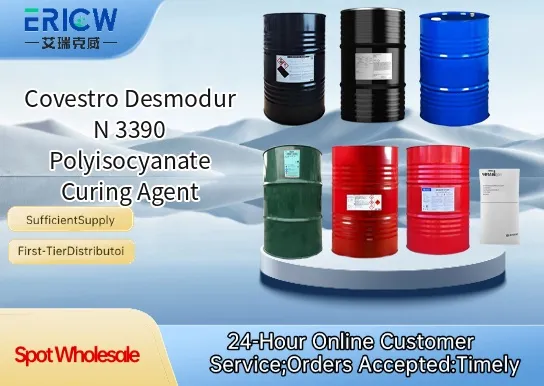
Aliphatic HDI-based trimer with excellent UV stability and color retention.
Low-viscosity liquid enabling easy handling, metering, and formulation without solvents.
High functionality and reactivity for rapid curing and superior crosslink density.
Excellent chemical resistance, including resistance to hydrolysis and abrasion.
Compliant with REACH and meets stringent VOC regulations for industrial coatings.
High-performance automotive clearcoats and basecoats.
Premium industrial maintenance coatings for machinery and infrastructure.
UV-resistant plastic coatings for outdoor applications.
Two-component (2K) polyurethane topcoats for wood and metal substrates.
Specialty coatings requiring gloss retention and weatherability in architectural facades.
| Chemical Type | Aliphatic HDI trimer (isocyanurate) |
| Product Form | Liquid |
| Appearance | Clear, pale yellow liquid |
| NCO Content (wt %) | 21.5 – 22.5% |
| Viscosity at 25 °C | 1,800 – 2,400 mPa·s |
| Density at 20 °C | 1.21 – 1.23 g/cm³ |
| Flash Point (PMCC) | 145 – 155 °C |
| Primary Applications | 2K polyurethane coatings requiring weather resistance and low yellowing |
Q1: What is the primary chemical composition and functionality of Desmodur N 3390?
A: Desmodur N 3390 is a low-viscosity, aliphatic polyisocyanate based on hexamethylene diisocyanate (HDI) trimer chemistry. It contains predominantly trifunctional HDI isocyanurate structures, offering excellent weather resistance, light stability, and compatibility with common hydroxyl-functional resins used in high-performance coatings.
Q2: How does Desmodur N 3390 compare to aromatic isocyanates like TDI or MDI in terms of performance and application suitability?
A: Unlike aromatic isocyanates, Desmodur N 3390 is aliphatic and therefore non-yellowing, UV-stable, and suitable for exterior applications requiring long-term gloss and color retention. It is commonly selected for premium automotive clearcoats, industrial maintenance coatings, and plastic coatings where aesthetics and durability are critical.
Q3: What are typical handling and storage recommendations for this product?
A: Desmodur N 3390 should be stored in tightly sealed containers under dry, cool conditions (typically below 30 °C), protected from moisture and direct sunlight. Prolonged exposure to humidity may cause gelation or viscosity increase due to reaction with water. Always use dry, clean equipment during handling to prevent premature curing.
Q4: Is Desmodur N 3390 compatible with standard polyester, acrylic, or polyether polyols?
A: Yes, Desmodur N 3390 exhibits broad compatibility with hydroxyl-functional resins including saturated polyester polyols, acrylic polyols, and certain polyether polyols. Compatibility and final film properties depend on molecular weight, OH value, and formulation balance — lab-scale testing is recommended for new systems.
Q5: What is the general guidance for catalyst use and pot life management?
A: Desmodur N 3390 typically reacts at ambient or elevated temperatures without strong catalysts. When faster cure is needed, tertiary amines or organometallic compounds (e.g., dibutyltin dilaurate) may be used at low concentrations. Pot life varies significantly with temperature, resin type, and catalyst level — formulations are generally designed for workable pot lives ranging from several hours to over 24 hours under controlled conditions.
Contact With Us:
E-mail: wangxingqiang@ericwchem.com
Have a Questions? Call Us:
Add:
Building A1, Jiete Industrial Park, Huangpu District, Guangzhou City, Guangdong Province, China