English
 Español
 tiếng việt
 русский
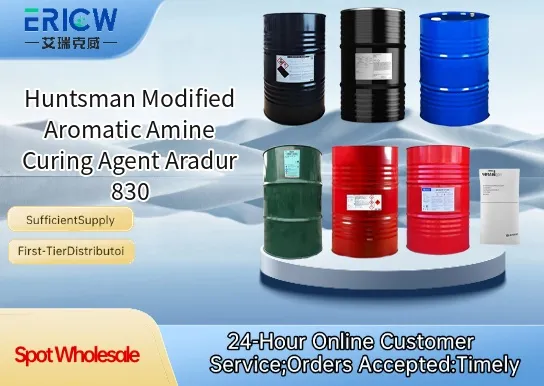
Low-viscosity liquid formulation enabling easy handling and precise metering in automated dispensing systems.
Extended pot life at ambient temperature, supporting complex part geometry and large-scale composite layup operations.
Excellent adhesion to carbon fiber, glass fiber, and metallic substrates without requiring surface priming.
High glass transition temperature (Tg) of cured epoxy systems—typically exceeding 160 °C after post-cure.
Reduced volatility and lower skin sensitization potential compared to conventional aromatic amine hardeners.
Aerospace structural composites, including primary and secondary aircraft components.
Wind turbine blade root joints and shear webs requiring high thermal and mechanical performance.
High-performance automotive under-hood components exposed to elevated service temperatures.
Industrial tooling and molds for RTM and infusion processes demanding dimensional stability and low exotherm.
Electrical insulation systems in high-voltage equipment and power transmission components.
| Chemical Type | Modified aromatic amine |
| Product Form | Clear to pale amber liquid |
| Appearance | Homogeneous, low-viscosity liquid |
| Primary Applications | Epoxy resin curing for structural composites and high-performance coatings |
| Key Features | Extended pot life, high Tg, low volatility, excellent adhesion |
| Benefits | Improved processability, reduced health hazard profile, enhanced thermal resistance |
| Density (25 °C) | Approx. 1.08–1.12 g/cm³ |
| Viscosity (25 °C) | Approx. 250–400 mPa·s |
Q1: What is the primary function of Aradur 830 in epoxy systems?
A: Aradur 830 is a modified aromatic amine curing agent designed to provide enhanced reactivity, improved mechanical properties, and good chemical resistance in formulated epoxy resins—particularly where elevated temperature performance and reduced volatility are desired compared to standard aliphatic amines.
Q2: How does Aradur 830 compare to conventional aromatic amines in terms of handling and safety?
A: As a modified aromatic amine, Aradur 830 offers lower volatility and reduced skin sensitization potential relative to unmodified aromatic amines like m-phenylenediamine (MPDA), while maintaining favorable cure kinetics and thermal stability—making it more suitable for industrial applications requiring safer handling without sacrificing performance.
Q3: Is Aradur 830 compatible with common epoxy resins used in composites and coatings?
A: Yes, Aradur 830 demonstrates broad compatibility with standard liquid and solid bisphenol-A and bisphenol-F epoxy resins, as well as novolac epoxies—enabling its use in high-performance structural adhesives, composite matrices, and protective coating systems.
Q4: What are typical processing conditions when using Aradur 830?
A: Aradur 830 typically enables room-temperature or moderately elevated temperature cures (e.g., 25–80 °C), depending on formulation requirements. Post-cure treatments may be applied to further enhance thermal and chemical resistance, especially in demanding engineering applications.
Q5: Can Aradur 830 be used in formulations requiring low viscosity and extended pot life?
A: Yes—Aradur 830 exhibits favorable viscosity characteristics and generally provides a workable pot life at ambient temperatures, making it suitable for applications such as filament winding, infusion, and spray-applied coatings where processing window and flow behavior are critical.
Contact With Us:
E-mail: wangxingqiang@ericwchem.com
Have a Questions? Call Us:
Add:
Building A1, Jiete Industrial Park, Huangpu District, Guangzhou City, Guangdong Province, China