English
 Español
 tiếng việt
 русский
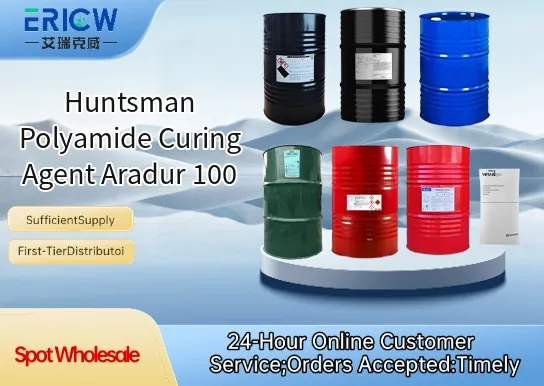
Flexible and tough cured epoxy systems with excellent impact resistance.
Good compatibility with standard liquid and solid epoxy resins.
Low viscosity enables easy handling and efficient mixing at ambient temperature.
Long pot life (typically 4–6 hours at 25°C) for extended processing window.
Provides good chemical resistance and adhesion to metals, concrete, and composites.
Structural adhesives for automotive and aerospace assembly.
Protective coatings for industrial steel structures and marine infrastructure.
Electrical encapsulants and insulating compounds for transformers and busbars.
Flooring systems including high-performance epoxy mortars and self-leveling compounds.
Composite matrix resins for wind turbine blades and pultruded profiles.
| Chemical Type | Polyamide adduct |
| Product Form | Liquid |
| Appearance | Amber to brown viscous liquid |
| Viscosity (25°C) | 1,800–2,500 mPa·s |
| Amine Value | 270–310 mg KOH/g |
| Reactive Amine Hydrogen Content | ~4.2 wt% |
| Density (25°C) | 0.95–0.98 g/cm³ |
| Primary Applications | Epoxy resin curing for coatings, adhesives, and composites |
Q1: What is the primary function of Aradur 100 in epoxy systems?
A: Aradur 100 is a polyamide-based curing agent designed to react with epoxy resins, enabling crosslinking at ambient or slightly elevated temperatures. It delivers flexible, tough, and chemically resistant thermoset networks suitable for protective coatings, adhesives, and composite matrices.
Q2: Is Aradur 100 compatible with standard bisphenol-A and bisphenol-F epoxy resins?
A: Yes, Aradur 100 is broadly compatible with common liquid and solid bisphenol-A and bisphenol-F epoxy resins. Compatibility and final performance depend on resin molecular weight, formulation pH, and processing conditions—preliminary compatibility testing is recommended for critical applications.
Q3: How does humidity affect the cure performance of Aradur 100-epoxy systems?
A: As a polyamide curing agent, Aradur 100 exhibits relatively low sensitivity to ambient moisture compared to amine-based alternatives. However, prolonged exposure to high humidity during cure may influence surface tackiness and final film integrity—controlled application environments are advised for optimal results.
Q4: Can Aradur 100 be used in food-contact or potable water applications?
A: Aradur 100 is not pre-qualified for direct food-contact or potable water applications under global regulatory frameworks. Formulators must conduct full compliance assessments—including extractables testing and regulatory review—based on the final cured system and intended use conditions.
Contact With Us:
E-mail: wangxingqiang@ericwchem.com
Have a Questions? Call Us:
Add:
Building A1, Jiete Industrial Park, Huangpu District, Guangzhou City, Guangdong Province, China