English
 Español
 tiếng việt
 русский
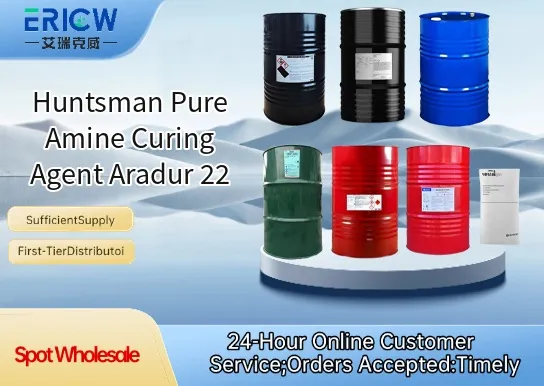
High-purity aliphatic amine formulation with low volatility and minimal odor.
Excellent compatibility with standard epoxy resins for consistent gel time and full cure development.
Provides superior mechanical properties including high tensile strength and impact resistance in cured systems.
Enables ambient-temperature curing without requiring post-bake, improving energy efficiency and process flexibility.
Low viscosity facilitates easy handling, precise metering, and uniform dispersion in formulated systems.
Structural adhesives for aerospace and automotive bonding.
High-performance protective coatings for industrial steel and concrete substrates.
Electrical encapsulation and potting compounds for power electronics and transformers.
Composite matrix resins in wind turbine blade manufacturing and pultrusion processes.
Repair mortars and grouts requiring rapid strength build-up and chemical resistance.
| Chemical Type | Aliphatic polyamine |
| Product Form | Liquid |
| Appearance | Clear, pale yellow liquid |
| Primary Applications | Epoxy resin curing agent for structural adhesives, coatings, and composites |
| Key Features | Ambient-cure capability, low odor, high reactivity, excellent adhesion |
| Benefits | Reduced processing energy, improved workplace safety, enhanced final part performance |
| Density (25°C) | Approx. 0.92–0.94 g/cm³ |
| Reactivity Profile | Medium to fast cure at room temperature with standard DGEBA epoxy resins |
Q1: What is the primary function of Aradur 22 in epoxy systems?
A: Aradur 22 is a low-viscosity, pure amine-based curing agent designed to react with epoxy resins, enabling crosslinking at ambient or elevated temperatures. It delivers excellent chemical resistance, mechanical strength, and adhesion—particularly suited for high-performance coatings, composites, and structural adhesives.
Q2: Is Aradur 22 compatible with standard bisphenol-A and bisphenol-F epoxy resins?
A: Yes, Aradur 22 exhibits broad compatibility with common liquid and solid bisphenol-A and bisphenol-F epoxy resins. Its reactivity profile allows formulation flexibility across a range of resin molecular weights and epoxide equivalents, though optimal stoichiometry should be confirmed experimentally for each system.
Q3: How does Aradur 22 compare to conventional polyamine curing agents in terms of pot life and cure speed?
A: As a pure amine, Aradur 22 offers more consistent and predictable reactivity than blended or modified polyamines. It typically provides a moderate pot life at room temperature—sufficient for application processing—while enabling faster development of early hardness and chemical resistance compared to slower aliphatic amines, especially under mild heat.
Q4: Can Aradur 22 be used in food-contact or potable water applications?
A: Aradur 22 is not pre-qualified for direct food-contact or potable water applications. Formulators must conduct full regulatory evaluation—including extractables testing and compliance verification against applicable regional requirements—before considering use in such sensitive end uses.
Q5: What handling precautions are recommended when working with Aradur 22?
A: As with all amine curing agents, appropriate personal protective equipment—including nitrile gloves, safety goggles, and ventilation—is essential during handling. Avoid skin contact and inhalation of mists or vapors. Refer to the current Safety Data Sheet (SDS) for detailed occupational hygiene guidance and first-aid measures.
Contact With Us:
E-mail: wangxingqiang@ericwchem.com
Have a Questions? Call Us:
Add:
Building A1, Jiete Industrial Park, Huangpu District, Guangzhou City, Guangdong Province, China