English
 Español
 tiếng việt
 русский
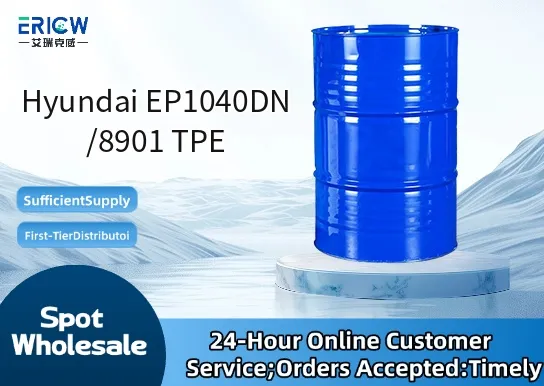
High elasticity and excellent rebound resilience for dynamic sealing and flexible component performance.
Good processability via injection molding and extrusion, enabling efficient high-volume production.
Enhanced thermal stability with continuous service temperature up to 100°C.
Outstanding resistance to ozone, UV radiation, and aging—ideal for outdoor and long-life applications.
Low extractables and compliant with RoHS and REACH directives for regulated industrial use.
Automotive interior trim components including soft-touch door panels and center console overlays.
Sealing systems for HVAC ducts and fluid-handling connectors in passenger vehicles.
Consumer electronics protective casings and ergonomic grips for power tools and appliances.
Medical device housings requiring biocompatibility-supportive material properties and clean processing.
Industrial gaskets and vibration-damping mounts in machinery and equipment enclosures.
| Chemical Type | Thermoplastic Elastomer (TPE) – Styrenic Block Copolymer (SBC) based |
| Product Form | Pellets |
| Appearance | Off-white, free-flowing granules |
| Primary Applications | Soft-touch overmolding, sealing, and functional elastomeric parts |
| Key Features | Elasticity, ease of processing, weather resistance, recyclability |
| Benefits | Reduced assembly steps, no vulcanization required, compatible with PP/PS substrates |
| Processing Method | Injection molding, extrusion, two-shot molding |
| Regulatory Compliance | RoHS 2015/863/EU, REACH SVHC-free, ISO 10993-5 (cytotoxicity tested) |
Q1: What is the primary function of Hyundai EP1040DN/8901 TPE in polymer formulations?
A: Hyundai EP1040DN/8901 TPE is a thermoplastic elastomer designed to enhance flexibility, impact resistance, and melt-processability in polyolefin-based compounds—particularly in soft-touch overmolding, automotive interior parts, and consumer product grips.
Q2: Is EP1040DN/8901 compatible with polypropylene (PP) and polyethylene (PE) matrices?
A: Yes—it exhibits good compatibility with both homopolymer and copolymer PP, as well as HDPE and LDPE. Its SEBS-based architecture enables effective dispersion and interfacial adhesion without requiring additional compatibilizers in most standard blending processes.
Q3: What processing methods are recommended for this TPE?
A: EP1040DN/8901 is optimized for conventional thermoplastic processing techniques including injection molding, extrusion, and two-shot molding. It demonstrates low melt viscosity, fast cycle times, and excellent flow into fine details—making it suitable for complex geometries and thin-wall applications.
Q4: Does this grade meet regulatory requirements for food contact or skin-safe applications?
A: While EP1040DN/8901 is formulated without intentionally added heavy metals or phthalates, formal compliance with food contact or medical-grade regulations depends on the final compounded formulation, processing conditions, and end-use testing. Customers should consult Hyundai’s technical documentation and conduct application-specific validation.
Contact With Us:
E-mail: wangxingqiang@ericwchem.com
Have a Questions? Call Us:
Add:
Building A1, Jiete Industrial Park, Huangpu District, Guangzhou City, Guangdong Province, China