English
 Español
 tiếng việt
 русский
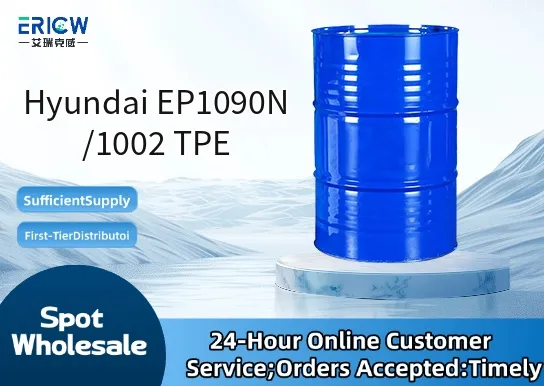
Thermoplastic elastomer (TPE) based on styrenic block copolymer (SBC) technology for excellent processability and recyclability.
Soft-touch surface finish with high elasticity and low compression set, ideal for ergonomic components.
Good resistance to UV exposure and ozone, supporting outdoor and long-term service applications.
Easy to color and bond with PP, PS, and ABS substrates without primers or adhesives.
Compliant with FDA 21 CFR §177.2600 for indirect food contact applications.
Overmolded grips for power tools, hand-held appliances, and medical devices.
Sealing rings and gaskets in automotive interior trim and fluid handling systems.
Soft-touch buttons and control interfaces for consumer electronics and home appliances.
Flexible tubing and connectors requiring chemical resistance and kink recovery.
Reusable packaging components requiring impact resilience and tactile feedback.
| Chemical Type | Styrenic Block Copolymer (SBC)-based TPE |
| Product Form | Pellets |
| Appearance | Off-white to light beige, free-flowing granules |
| Hardness (Shore A) | 90 ± 3 |
| Density (g/cm³) | 0.92–0.94 |
| Melt Flow Rate (200°C/5 kg) | 12–18 g/10 min |
| Key Features | Soft-touch, overmolding grade, primerless adhesion |
| Primary Applications | Ergonomic overmolding, seals, flexible functional parts |
Q1: What is the primary application domain for Hyundai EP1090N/1002 TPE?
A: Hyundai EP1090N/1002 TPE is a thermoplastic elastomer formulated for soft-touch overmolding and functional grip applications—commonly used in automotive interior components, consumer electronics housings, and industrial tool handles where resilience, tactile comfort, and adhesion to rigid substrates like PP or ABS are required.
Q2: Is EP1090N/1002 compatible with common injection molding equipment and processing conditions?
A: Yes—this TPE is designed for standard injection molding processes. It exhibits good melt stability and low thermal degradation risk within typical processing temperature ranges for styrenic TPEs. Drying is recommended prior to processing to minimize surface defects, and mold temperatures should be optimized based on part geometry and substrate compatibility requirements.
Q3: How does EP1090N/1002 perform in terms of adhesion to polypropylene (PP) and other polyolefins?
A: EP1090N/1002 offers strong inherent adhesion to untreated PP and similar polyolefin substrates without requiring primers or surface treatments in most standard overmolding configurations. Bond strength may vary depending on melt temperature, mold contact time, and substrate surface condition—so process validation is advised for critical applications.
Q4: What are the key handling and storage recommendations for this TPE?
A: Store in original sealed packaging at ambient temperature and low humidity. Prior to processing, dry the material using a desiccant dryer at 60–70 °C for 2–4 hours to ensure optimal melt consistency and surface quality. Avoid prolonged exposure to high ambient moisture or direct sunlight before use.
Contact With Us:
E-mail: wangxingqiang@ericwchem.com
Have a Questions? Call Us:
Add:
Building A1, Jiete Industrial Park, Huangpu District, Guangzhou City, Guangdong Province, China