English
 Español
 tiếng việt
 русский
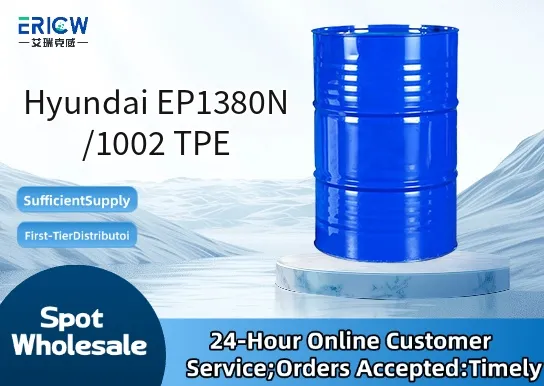
Excellent soft-touch feel with balanced hardness (Shore A 80) for ergonomic and premium surface applications.
Good processability via injection molding and extrusion, enabling high-cycle production with minimal warpage.
Enhanced thermal stability up to 130°C short-term, supporting under-hood and appliance component requirements.
Outstanding adhesion to polypropylene (PP) and ABS substrates without primer or surface treatment.
Compliant with RoHS and REACH regulations, free of phthalates, heavy metals, and halogenated flame retardants.
Automotive interior trim components including instrument panel overlays, door armrests, and center console covers.
Consumer electronics housings and protective grips for power tools, handheld devices, and kitchen appliances.
Medical device overmolding for non-sterile, touch-sensitive interfaces and ergonomic handles.
Home appliance control panels, knobs, and sealing gaskets requiring flexibility and chemical resistance.
Industrial equipment grips, seals, and vibration-damping pads where tactile feedback and durability are critical.
| Chemical Type | Thermoplastic Elastomer (TPE) – Styrenic Block Copolymer (SBC) based |
| Product Form | Pellets |
| Appearance | Off-white to light beige, free-flowing granules |
| Hardness (Shore A) | 80 ± 3 |
| Melt Flow Rate (200°C/5 kg) | 12–16 g/10 min |
| Density | 0.90–0.92 g/cm³ |
| Tensile Strength (ASTM D412) | 8–10 MPa |
| Key Features | Soft-touch surface, PP/ABS adhesion, RoHS/REACH compliant, low extractables |
Q1: What is the primary function of Hyundai EP1380N/1002 TPE in polymer formulations?
A: Hyundai EP1380N/1002 TPE is a thermoplastic elastomer modifier designed to enhance flexibility, impact resistance, and melt processability in rigid thermoplastic matrices—particularly polypropylene (PP) and polyethylene (PE) compounds. It functions as a compatibilized impact modifier rather than a standalone structural polymer.
Q2: Is this grade suitable for applications requiring food-contact compliance?
A: Hyundai EP1380N/1002 TPE is formulated without intentionally added heavy metals or restricted plasticizers, and is commonly used in food-contact-adjacent applications such as packaging components and kitchenware housings. However, final regulatory approval depends on full formulation testing and compliance with applicable regional requirements—including migration testing under end-use conditions.
Q3: How does processing temperature affect the performance of EP1380N/1002 during extrusion or injection molding?
A: This TPE exhibits good thermal stability within typical PP/PE processing windows (180–230 °C). Excessive residence time above 240 °C may lead to partial degradation of the elastomeric phase, reducing toughness enhancement. Optimal dispersion is achieved with moderate shear and uniform melt temperature control.
Q4: Can EP1380N/1002 be blended with recycled polypropylene?
A: Yes—this grade is frequently employed to restore impact performance and process consistency in post-consumer and post-industrial PP recyclates. Its compatibility aids in stabilizing heterogeneous recycled streams, though optimal dosage depends on the quality and composition of the recycled feedstock.
Contact With Us:
E-mail: wangxingqiang@ericwchem.com
Have a Questions? Call Us:
Add:
Building A1, Jiete Industrial Park, Huangpu District, Guangzhou City, Guangdong Province, China