English
 Español
 tiếng việt
 русский
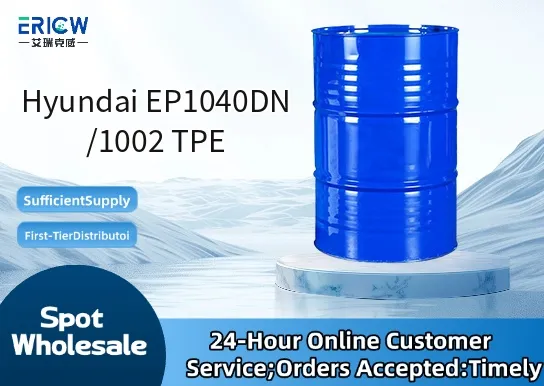
Excellent balance of soft-touch feel and mechanical strength for demanding overmolding applications.
Good adhesion to polypropylene (PP) and polyethylene (PE) substrates without primer or surface treatment.
High flowability suitable for thin-wall and complex geometry injection molding processes.
Enhanced UV and thermal stability for improved long-term performance in outdoor and automotive environments.
RoHS-compliant and free of halogens, phthalates, and heavy metals per current regulatory requirements.
Automotive interior trim components including door handles, armrests, and gear shift knobs.
Consumer electronics casings and soft-grip overmolded surfaces for power tools and small appliances.
Household appliance control panels and ergonomic touch surfaces requiring tactile comfort and durability.
Medical device grips and non-critical housing components where biocompatibility and clean processing are essential.
Industrial equipment seals and gaskets requiring resilience under repeated flexing and moderate chemical exposure.
| Chemical Type | Thermoplastic Elastomer (TPE) – Styrenic Block Copolymer (SBC) based |
| Product Form | Pellets |
| Appearance | Translucent off-white granules |
| Primary Applications | Overmolding, soft-touch finishing, flexible functional parts |
| Key Features | Easy processability, substrate adhesion, low compression set |
| Benefits | Reduced cycle time, elimination of secondary bonding steps, recyclable scrap |
| Processing Method | Injection molding, extrusion |
| Storage Conditions | Store in dry, cool conditions (<25°C); keep sealed to prevent moisture absorption |
Q1: What is the primary application profile for Hyundai EP1040DN/1002 TPE?
A: Hyundai EP1040DN/1002 TPE is a thermoplastic elastomer engineered for soft-touch overmolding and functional grip applications—commonly used in automotive interior components, consumer electronics housings, and medical device handles where resilience, tactile comfort, and processability are critical.
Q2: Is this grade compatible with common engineering thermoplastics for two-shot molding?
A: Yes, EP1040DN/1002 TPE exhibits good adhesion to polypropylene (PP), polyethylene (PE), and ABS substrates when processed under standard two-shot or insert molding conditions. Bond strength depends on surface preparation, mold temperature, and interfacial residence time—notably enhanced without requiring primers or plasma treatment in most validated setups.
Q3: What are the key processing recommendations for optimal part quality?
A: Recommended melt processing temperatures range between 170–210 °C, depending on equipment and part geometry. Drying is advised at 60–70 °C for 2–4 hours prior to processing to minimize surface defects. Injection speed and holding pressure should be optimized to balance flow length and knit-line integrity, particularly in thin-wall or high-precision applications.
Q4: Does this TPE meet regulatory requirements for food contact or skin-safe applications?
A: EP1040DN/1002 TPE is formulated without intentionally added heavy metals, phthalates, or halogenated flame retardants. While it is suitable for general consumer-facing applications requiring skin contact compliance, formal food-contact or medical-grade certification requires case-specific evaluation and testing per end-use regulatory frameworks.
Q5: How does EP1040DN/1002 compare to conventional SEBS-based TPEs in terms of hardness and elasticity?
A: This grade delivers a balanced combination of low Shore A hardness (typically in the 40–50 A range) and high elastic recovery, offering superior compression set resistance compared to many standard SEBS formulations—making it especially well-suited for dynamic sealing and repeated-flex applications.
Contact With Us:
E-mail: wangxingqiang@ericwchem.com
Have a Questions? Call Us:
Add:
Building A1, Jiete Industrial Park, Huangpu District, Guangzhou City, Guangdong Province, China