English
 Español
 tiếng việt
 русский
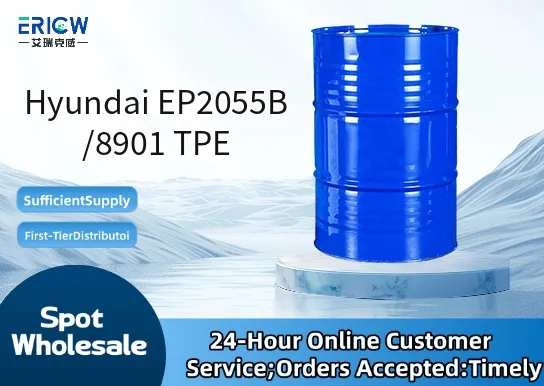
Thermoplastic elastomer (TPE) based on SEBS thermoplastic rubber matrix for excellent elasticity and processability.
Low compression set and superior resilience, ensuring long-term sealing and rebound performance.
Good compatibility with polypropylene (PP) and polyethylene (PE), enabling efficient overmolding and co-extrusion.
Halogen-free formulation meeting RoHS and REACH compliance requirements for sustainable manufacturing.
Smooth surface finish and high gloss retention after injection molding or extrusion.
Automotive interior trim components including door panels, armrests, and instrument cluster bezels.
Consumer electronics protective cases and soft-touch grips for power tools and handheld devices.
Household appliance seals, gaskets, and ergonomic handles for kitchen and laundry equipment.
Medical device housings and non-critical patient-contact components requiring skin-safe tactile properties.
Industrial packaging closures and flexible hinges for reusable containers.
| Chemical Type | SEBS-based Thermoplastic Elastomer (TPE) |
| Product Form | Pellets |
| Appearance | Off-white to light beige, free-flowing granules |
| Primary Applications | Overmolding, soft-touch surfaces, flexible seals and gaskets |
| Key Features | Elasticity, PP/PE compatibility, low compression set, halogen-free |
| Benefits | Reduced cycle time vs. thermoset rubber, recyclable processing, no vulcanization required |
| Processing Method | Injection molding, extrusion, two-shot molding |
| Storage Conditions | Store in dry, cool environment (<30°C); protect from moisture and direct sunlight |
Q1: What is the primary application domain for Hyundai EP2055B/8901 TPE?
A: Hyundai EP2055B/8901 TPE is a thermoplastic elastomer formulated primarily for soft-touch overmolding and functional grip applications in automotive interior components, consumer electronics housings, and medical device handles — where balanced processability, surface aesthetics, and tactile performance are critical.
Q2: Is EP2055B/8901 compatible with common engineering thermoplastics used in two-shot molding?
A: Yes, EP2055B/8901 exhibits good adhesion to polypropylene (PP), polyethylene (PE), and ABS substrates when processed under optimized temperature and mold conditions. Bond strength depends on substrate surface energy, mold design, and processing parameters — pre-treatment or primers may be beneficial for demanding applications.
Q3: How does EP2055B/8901 perform in terms of thermal stability during injection molding?
A: EP2055B/8901 demonstrates stable melt behavior within typical TPE processing windows (170–210 °C). It shows low thermal degradation tendency and minimal volatiles evolution under standard residence times, supporting consistent part quality and reduced machine fouling.
Q4: Does this grade contain halogenated flame retardants or heavy metals?
A: No, Hyundai EP2055B/8901 TPE is formulated without brominated or chlorinated flame retardants and complies with RoHS restrictions on lead, cadmium, mercury, hexavalent chromium, and certain phthalates. It is intended for general-purpose use where regulatory compliance for restricted substances is required.
Contact With Us:
E-mail: wangxingqiang@ericwchem.com
Have a Questions? Call Us:
Add:
Building A1, Jiete Industrial Park, Huangpu District, Guangzhou City, Guangdong Province, China