English
 Español
 tiếng việt
 русский
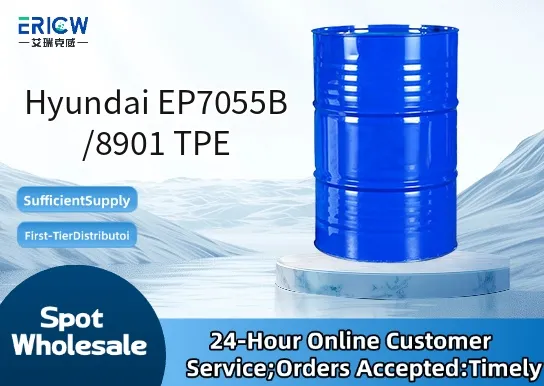
Excellent soft-touch feel with balanced hardness (Shore A 55–60) for ergonomic and consumer-friendly surfaces.
Superior adhesion to polypropylene (PP) and polyethylene (PE), enabling reliable two-component overmolding without primers.
Good thermal stability up to 130 °C, supporting injection molding and post-processing at elevated temperatures.
Low extractables and compliant with FDA 21 CFR §177.2600 for incidental food contact applications.
Recyclable within TPE streams and free of halogens, phthalates, and heavy metals per RoHS and REACH requirements.
Automotive interior trim: door panels, armrests, and gear shift knobs.
Consumer electronics housings: smartphone grips, power tool overmolds, and wearable device bands.
Household appliance components: detergent dispenser seals, kettle handles, and blender grips.
Medical device accessories: non-sterile housing overmolds and ergonomic hand-held instrument grips.
Packaging closures and dispensing caps requiring soft-seal functionality and tactile feedback.
| Chemical Type | Thermoplastic Elastomer (TPE) — Styrenic Block Copolymer (SBC) based |
| Product Form | Pellets |
| Appearance | Translucent off-white granules |
| Hardness (Shore A) | 57 ± 3 |
| Melt Flow Rate (200 °C / 5 kg) | 18 g/10 min |
| Density | 0.90 g/cm³ |
| Key Features | Soft-touch, PP/PE adhesion, low odor, easy processing |
| Compliance | RoHS 2011/65/EU, REACH SVHC-free, FDA 21 CFR §177.2600 |
Q1: What is the primary application profile for Hyundai EP7055B/8901 TPE?
A: This thermoplastic elastomer is engineered for soft-touch overmolding and flexible component integration—commonly used in automotive interior trim, consumer electronics housings, and medical device grips where resilience, tactile comfort, and adhesion to rigid substrates like PP or ABS are required.
Q2: Is Hyundai EP7055B/8901 TPE compatible with common injection molding equipment?
A: Yes—it processes reliably on standard injection molding machines without requiring specialized hardware. Typical melt temperatures range between 170–210 °C, and mold temperatures are generally maintained at 20–40 °C for optimal surface finish and cycle time efficiency.
Q3: How does this grade perform in terms of thermal stability and long-term aging?
A: Hyundai EP7055B/8901 TPE exhibits good thermal stability during processing and retains flexibility and mechanical integrity under normal ambient service conditions. For extended outdoor exposure, UV stabilizers or protective topcoats are recommended to mitigate potential surface degradation.
Q4: Can it be recycled within a closed-loop manufacturing process?
A: Yes—this TPE is fully thermoplastic and compatible with regrind reuse, typically at controlled levels depending on application performance requirements. Virgin-to-regrind ratios should be optimized per part functionality, especially where surface aesthetics or tensile recovery are critical.
Contact With Us:
E-mail: wangxingqiang@ericwchem.com
Have a Questions? Call Us:
Add:
Building A1, Jiete Industrial Park, Huangpu District, Guangzhou City, Guangdong Province, China