English
 Español
 tiếng việt
 русский
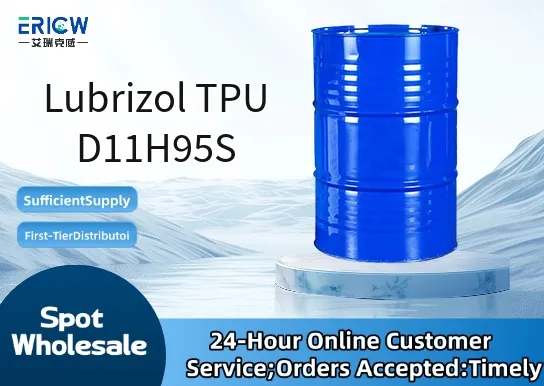
High melt flow index for excellent processability in extrusion and injection molding.
Outstanding abrasion resistance and mechanical toughness at elevated temperatures.
Good hydrolytic stability, suitable for humid or wet-end processing environments.
Excellent clarity and low haze for transparent or translucent end-use applications.
Compatible with common TPU processing equipment and readily recyclable within TPU streams.
Thin-walled medical tubing requiring kink resistance and biocompatibility support.
Consumer electronics protective cases and wearable device components.
Automotive interior trim parts including soft-touch overlays and flexible gaskets.
High-performance sportswear membranes and seamless laminated fabrics.
Industrial hoses and fluid transfer lines demanding flexibility and chemical resilience.
| Chemical Type | Thermoplastic Polyurethane (TPU), polyester-based |
| Product Form | Pellets |
| Appearance | Translucent, natural-colored pellets |
| Primary Applications | Extrusion, injection molding, blow molding |
| Key Features | High flow, hydrolysis-resistant, excellent clarity |
| Benefits | Reduced cycle times, consistent part quality, broad processing window |
| Processing Temperature Range | 180–220 °C (recommended) |
| Storage Conditions | Store in dry, cool conditions; desiccate before processing if exposed to humidity |
Q1: What is the primary function of Lubrizol TPU D11H95S in thermoplastic polyurethane (TPU) formulations?
A: Lubrizol TPU D11H95S is a high-performance processing aid and melt-flow modifier designed to enhance extrudability, reduce melt viscosity, and improve surface finish in TPU compounds—particularly during extrusion and injection molding processes.
Q2: Is Lubrizol TPU D11H95S compatible with all major TPU chemistries (e.g., polyester-, polyether-, and polycaprolactone-based TPUs)?
A: Yes, it demonstrates broad compatibility across common TPU base resins, including aromatic and aliphatic variants. Performance optimization may vary depending on polymer polarity and molecular weight, so formulation-specific evaluation is recommended.
Q3: How does Lubrizol TPU D11H95S affect the mechanical properties of the final TPU product?
A: When used at typical dosage levels, it maintains key mechanical attributes such as tensile strength, elongation, and tear resistance. Its primary role is process enhancement rather than property modification, though minor trade-offs in hardness or modulus may occur at higher loadings.
Q4: Can Lubrizol TPU D11H95S be used in applications requiring regulatory compliance for food contact or medical devices?
A: Lubrizol TPU D11H95S is not pre-qualified for direct food-contact or medical device applications. Customers intending such use must conduct full regulatory assessment—including extractables profiling and end-use validation—per applicable regional requirements.
Q5: What is the recommended method of incorporation into TPU resin?
A: It is typically introduced via dry-blending with base TPU pellets prior to extrusion or injection molding. For optimal dispersion, avoid excessive pre-drying temperatures and ensure uniform mixing—tumble blending for 5–10 minutes is commonly effective.
Contact With Us:
E-mail: wangxingqiang@ericwchem.com
Have a Questions? Call Us:
Add:
Building A1, Jiete Industrial Park, Huangpu District, Guangzhou City, Guangdong Province, China