English
 Español
 tiếng việt
 русский
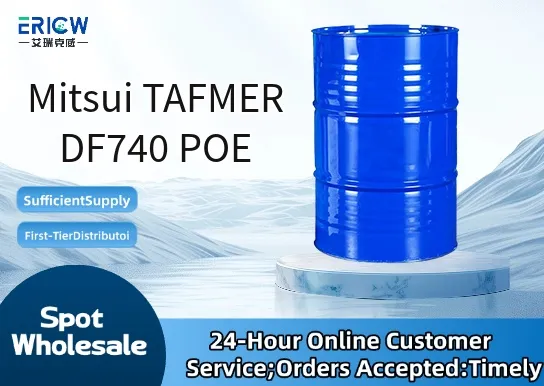
Excellent melt processability for high-speed extrusion and injection molding
Outstanding flexibility and low-temperature impact resistance
Superior compatibility with polypropylene (PP) and polyethylene (PE) matrices
High clarity and gloss retention in transparent applications
Low extractables and excellent long-term thermal stability
Automotive interior trim and soft-touch overmolding
Flexible packaging films requiring seal integrity and toughness
Medical tubing and disposable device components
Consumer electronics protective cases and grips
Thermoplastic elastomer (TPE) blends for durable consumer goods
| Chemical Type | Ethylene-octene copolymer (POE) |
| Product Form | Pellets |
| Appearance | Off-white, free-flowing pellets |
| Primary Applications | PP/PE modification, flexible TPE compounds, soft-touch overmolding |
| Key Features | Melt flow index (MFI, 2.16 kg @ 230°C): ~3.5 g/10 min |
| Benefits | Enhanced impact strength, improved process efficiency, excellent weatherability |
| Density | ~0.870 g/cm³ |
| Compliance | Meets FDA 21 CFR §177.1520 for food-contact applications (subject to formulation) |
Q1: What is the primary function of TAFMER DF740 in polymer blends?
A: TAFMER DF740 is an ethylene-octene polyolefin elastomer designed primarily as a compatibilizer and impact modifier—especially in polypropylene (PP) and polyethylene (PE) systems—enhancing toughness, flexibility, and interfacial adhesion without significantly compromising stiffness or processability.
Q2: Is TAFMER DF740 suitable for use in food-contact applications?
A: TAFMER DF740 is manufactured to meet stringent purity requirements and is commonly selected for food-contact compliant formulations when compounded under appropriate conditions; however, final regulatory approval depends on the complete formulation, processing parameters, and applicable regional regulations.
Q3: How does DF740 compare to other TAFMER grades in terms of melt flow and elasticity?
A: DF740 offers a balanced combination of moderate melt flow behavior and high elasticity, making it particularly well-suited for injection molding and extrusion processes where both good processability and post-mold resilience are required—distinct from higher-MI grades intended for thin-wall applications or lower-MI variants used in demanding thermoforming.
Q4: Can DF740 be used in thermoplastic vulcanizates (TPVs)?
A: Yes—DF740 is frequently employed as a soft-phase component or dynamic vulcanization aid in PP-based TPV formulations, contributing to improved elastomeric character, compression set resistance, and thermal stability during processing.
Contact With Us:
E-mail: wangxingqiang@ericwchem.com
Have a Questions? Call Us:
Add:
Building A1, Jiete Industrial Park, Huangpu District, Guangzhou City, Guangdong Province, China