English
 Español
 tiếng việt
 русский
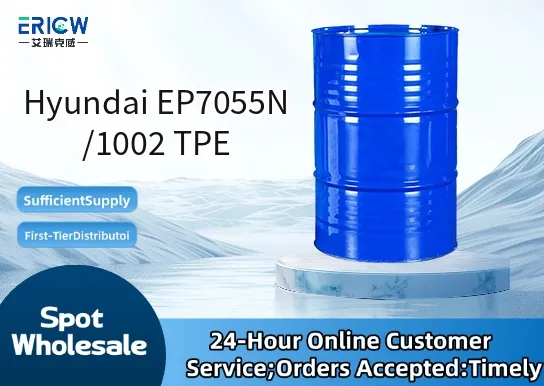
Excellent soft-touch feel with balanced hardness (Shore A 55) for ergonomic and aesthetic design.
Good processability via injection molding and extrusion, enabling high-cycle production efficiency.
Enhanced adhesion to polypropylene (PP) and polyethylene (PE), supporting overmolding without primer.
UV-stable formulation providing improved resistance to discoloration and surface degradation under outdoor exposure.
RoHS-compliant and REACH-conformant, meeting global regulatory requirements for consumer and automotive applications.
Automotive interior trim components, including door panels, armrests, and gear knobs.
Consumer electronics housings and protective covers requiring tactile feedback and impact absorption.
Household appliance grips and control buttons for kitchen and laundry equipment.
Medical device enclosures and non-critical wearable interfaces demanding skin-safe, low-extractables materials.
Industrial tool overmolds for hand-held power tools and ergonomic handles.
| Chemical Type | Thermoplastic Elastomer (TPE) – Styrenic Block Copolymer (SBC) based |
| Product Form | Pellets |
| Appearance | Translucent off-white granules |
| Hardness (Shore A) | 55 ± 3 |
| Melt Flow Rate (230°C/5 kg) | 18–22 g/10 min |
| Density | 0.90–0.92 g/cm³ |
| Primary Applications | Overmolding on PP/PE substrates, soft-touch components |
| Processing Method | Injection molding, extrusion |
Q1: What is the primary application domain for Hyundai EP7055N/1002 TPE?
A: Hyundai EP7055N/1002 TPE is primarily engineered for use in soft-touch overmolding and functional elastomeric components—especially in automotive interior parts, consumer electronics housings, and medical device grips—where balanced processability, surface aesthetics, and dynamic mechanical resilience are required.
Q2: Is EP7055N/1002 compatible with common thermoplastics used in two-shot molding?
A: Yes, EP7055N/1002 exhibits good adhesion to a range of engineering thermoplastics—including polypropylene (PP), ABS, and PC/ABS blends—without requiring primers or surface treatment, making it suitable for standard two-shot injection molding processes.
Q3: How does EP7055N/1002 perform under repeated flexing or compression?
A: This grade delivers excellent elastic recovery and fatigue resistance due to its thermoplastic elastomer architecture, maintaining dimensional stability and tactile integrity after prolonged cyclic deformation—ideal for repeatedly actuated components like buttons, seals, and gaskets.
Q4: What processing conditions are recommended for optimal surface quality?
A: For best surface finish and minimal flow marks, mold temperatures should be maintained in the moderate range (typically 35–50 °C), while melt temperatures are generally optimized between 180–210 °C depending on equipment and part geometry.
Q5: Can EP7055N/1002 be colored or compounded with additives?
A: Yes, it is fully compatible with standard masterbatch systems and can be readily compounded with pigments, UV stabilizers, or antimicrobial agents—dosage depends on formulation requirements and regulatory compliance goals for the end-use application.
Contact With Us:
E-mail: wangxingqiang@ericwchem.com
Have a Questions? Call Us:
Add:
Building A1, Jiete Industrial Park, Huangpu District, Guangzhou City, Guangdong Province, China