English
 Español
 tiếng việt
 русский
High melt strength and excellent extrudability for stable profile and film processing.
Outstanding clarity and gloss, ideal for transparent or translucent end products.
Good thermal stability and low odor, suitable for sensitive applications including consumer-facing goods.
Excellent compatibility with polypropylene (PP) and polystyrene (PS), enabling robust thermoplastic vulcanizate (TPV) and soft-touch blends.
Low compression set and superior elastic recovery at room and elevated temperatures.
Soft-touch overmolding for automotive interior trim and instrument panels.
Transparent medical tubing and fluid handling components requiring biocompatibility support.
High-clarity packaging films and sealants for premium consumer packaging.
Flexible grips and ergonomic handles for power tools and personal care devices.
Thermoplastic elastomer (TPE) compounds for wire & cable jacketing with enhanced flexibility and flame-retardant formulation compatibility.
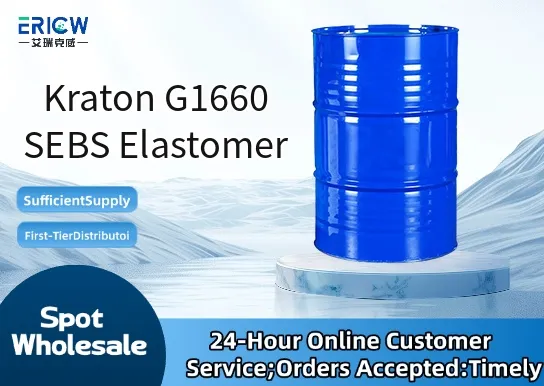
| Chemical Type | Styrene–ethylene/butylene–styrene (SEBS) triblock copolymer |
| Product Form | Pellets |
| Appearance | Translucent, off-white to light amber pellets |
| Primary Applications | Soft-touch overmolding, transparent TPE compounds, medical tubing, consumer product grips |
| Key Features | High clarity, low compression set, excellent PP/PS compatibility, low odor |
| Benefits | Improved process stability, enhanced aesthetics, regulatory compliance readiness (e.g., USP Class VI, ISO 10993 support) |
| Melt Flow Rate (230 °C / 2.16 kg) | 1.5–2.5 g/10 min |
| Styrene Content | Approx. 30 wt% |
Q1: What is the primary functional role of Kraton G1660 in thermoplastic elastomer (TPE) formulations?
A: Kraton G1660 is a linear triblock copolymer of styrene–ethylene/butylene–styrene (SEBS), primarily used as a high-performance thermoplastic elastomer modifier to enhance melt processability, tensile strength, and elastic recovery—especially in soft-touch overmolding, medical tubing, and consumer product grips.
Q2: Is Kraton G1660 suitable for applications requiring regulatory compliance in healthcare or food contact?
A: Kraton G1660 is manufactured under stringent quality controls and is commonly selected for medical and food-contact-adjacent applications where extractables and biocompatibility are critical. End-use compliance depends on full formulation evaluation and final device testing per applicable regional requirements.
Q3: How does Kraton G1660 compare to other SEBS grades in terms of melt viscosity and processing behavior?
A: Kraton G1660 exhibits moderate melt viscosity relative to higher-molecular-weight SEBS grades, offering good flow characteristics for extrusion and injection molding while retaining sufficient elasticity and thermal stability for demanding TPE blends.
Q4: Can Kraton G1660 be blended with polypropylene (PP) or polyethylene (PE) without compatibilizers?
A: While Kraton G1660 demonstrates some inherent compatibility with PP due to its ethylene/butylene mid-block, optimal phase dispersion and mechanical performance in PP or PE blends typically benefit from careful formulation design—and may require additional compatibilization depending on the target properties and processing conditions.
Contact With Us:
E-mail: wangxingqiang@ericwchem.com
Have a Questions? Call Us:
Add:
Building A1, Jiete Industrial Park, Huangpu District, Guangzhou City, Guangdong Province, China