English
 Español
 tiếng việt
 русский

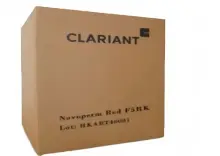
Highly engineered synthetic iron oxide pigment with exceptional color consistency and batch-to-batch reproducibility.
Optimized particle size distribution for improved dispersion stability in aqueous and solvent-based systems.
Excellent heat stability up to 250°C, suitable for high-temperature processing applications.
Low heavy metal content, compliant with global regulatory requirements including EU REACH and US EPA guidelines.
Enhanced UV resistance and lightfastness, minimizing color degradation under prolonged outdoor exposure.
Architectural and industrial coatings requiring durable, weather-resistant red-brown hues.
Concrete and cementitious products, including precast elements and colored paving stones.
Plastics compounding for exterior-facing components such as automotive trim and building profiles.
Ceramic glazes and underglaze decorations where thermal stability during firing is critical.
Specialty inks for packaging and labeling demanding high opacity and chemical resistance.
| Chemical Type | Synthetic Iron Oxide (α-Fe₂O₃) |
| Product Form | Free-flowing dry powder |
| Appearance | Red-brown granular powder |
| Primary Applications | Coatings, construction materials, plastics, ceramics, inks |
| Key Features | High tinting strength, excellent dispersibility, low oil absorption |
| Benefits | Reduced formulation viscosity, improved color development, extended service life |
| pH (10% aqueous slurry) | 6.5 – 8.0 |
| Volatile Matter (105°C, 2h) | ≤ 1.0 wt% |
Q1: What is the primary function of Imerys 2500C Pigment in polymer systems?
A: Imerys 2500C Pigment is a high-purity, surface-treated calcium carbonate designed primarily to provide opacity, brightness, and controlled rheology in thermoplastic and thermoset compounds—particularly where consistent dispersion and minimal impact on mechanical properties are required.
Q2: Is Imerys 2500C Pigment suitable for food-contact or medical-grade applications?
A: While Imerys 2500C Pigment meets general industrial purity specifications and is manufactured under strict quality controls, its suitability for regulated applications such as food contact or medical devices depends on final formulation validation and compliance with applicable regional regulatory frameworks. Customers should consult Imerys technical support and conduct appropriate testing for their specific end-use requirements.
Q3: How does Imerys 2500C Pigment differ from standard ground calcium carbonates?
A: Unlike conventional ground calcium carbonates, Imerys 2500C features a tailored surface treatment that enhances compatibility with non-polar polymers, improves dispersion stability, and reduces agglomeration during compounding—resulting in smoother melt flow and more uniform color development in pigmented systems.
Q4: What are typical processing considerations when incorporating Imerys 2500C Pigment into masterbatches?
A: For optimal performance, pre-drying is generally not required due to its low moisture sensitivity, but good mixing energy and sufficient residence time during extrusion are recommended to ensure complete deagglomeration and uniform distribution. Dosage typically ranges from 0.1% to 2% by weight depending on the desired opacity and base resin characteristics.
Contact With Us:
E-mail: wangxingqiang@ericwchem.com
Have a Questions? Call Us:
Add:
Building A1, Jiete Industrial Park, Huangpu District, Guangzhou City, Guangdong Province, China