English
 Español
 tiếng việt
 русский
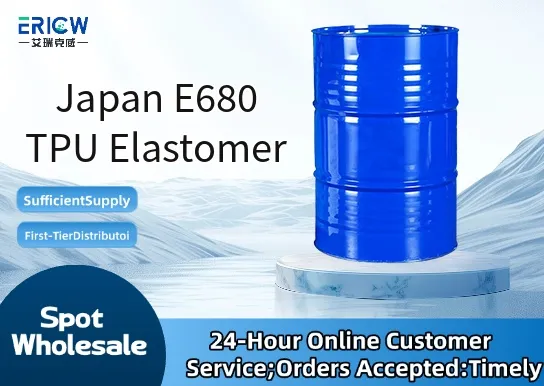
Excellent abrasion resistance for extended service life in demanding mechanical environments.
Superior elasticity and recovery performance across a wide temperature range (−30 °C to 80 °C).
Good oil, grease, and hydrocarbon resistance without plasticizer migration.
High transparency and clarity with low haze, suitable for optical-grade applications.
Excellent processability via injection molding, extrusion, and blow molding with minimal thermal degradation.
Medical tubing and fluid delivery systems requiring biocompatibility and kink resistance.
High-performance automotive interior trim and soft-touch overlays.
Transparent protective films for electronic displays and touch panels.
Flexible industrial hoses and pneumatic connectors.
Wear-resistant components for precision robotics and automation equipment.
| Chemical Type | Aliphatic polyester-based thermoplastic polyurethane |
| Product Form | Pellets (free-flowing, uniform cylindrical granules) |
| Appearance | Transparent, slightly yellowish translucent pellets |
| Density (g/cm³) | 1.18–1.20 (ASTM D792) |
| Melt Flow Index (g/10 min) | 10–14 (200 °C / 5 kg, ASTM D1238) |
| Hardness (Shore A) | 85 ± 2 (ASTM D2240) |
| Tensile Strength (MPa) | 32–36 (ASTM D412) |
| Elongation at Break (%) | 480–520 (ASTM D412) |
Q1: What are the key processing advantages of Japan E680 TPU Elastomer compared to conventional TPU grades?
A: Japan E680 offers enhanced melt flow stability and reduced viscosity sensitivity during extrusion and injection molding, enabling smoother processing at lower shear rates and improved surface finish in thin-walled or complex geometries.
Q2: Is Japan E680 suitable for applications requiring long-term hydrolytic stability?
A: Yes — Japan E680 is formulated with hydrolysis-resistant polyester-based chemistry, delivering significantly improved resistance to moisture-induced degradation compared to standard polyester TPUs, especially under elevated temperature and humidity conditions.
Q3: Can Japan E680 be blended with other thermoplastics or elastomers?
A: Japan E680 exhibits good compatibility with common engineering thermoplastics such as PC, ABS, and certain polyesters, and can be used in alloy formulations to balance toughness, flexibility, and processability — compatibility testing is recommended for specific end-use requirements.
Q4: Does Japan E680 require special drying before processing?
A: Yes — like most hygroscopic TPUs, Japan E680 should be thoroughly dried prior to processing. Recommended drying conditions are typically 80–90 °C for 2–4 hours using a desiccant dryer to ensure optimal mechanical performance and surface quality.
Contact With Us:
E-mail: wangxingqiang@ericwchem.com
Have a Questions? Call Us:
Add:
Building A1, Jiete Industrial Park, Huangpu District, Guangzhou City, Guangdong Province, China