English
 Español
 tiếng việt
 русский
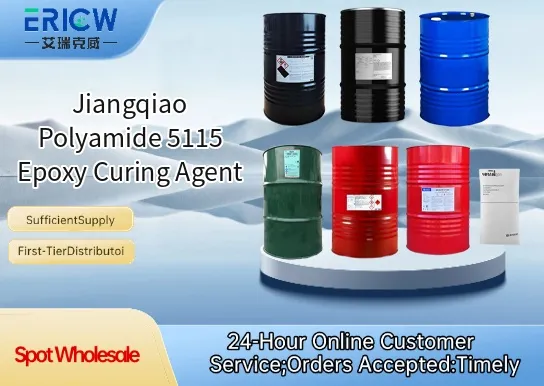
Excellent flexibility and impact resistance in cured epoxy systems.
Low viscosity enables easy handling, mixing, and improved wetting of fillers and reinforcements.
Good compatibility with standard liquid and solid bisphenol-A epoxy resins.
Room-temperature curable with extended pot life for practical processing windows.
Superior chemical resistance to alkalis, salts, and mild solvents after full cure.
Protective coatings for steel structures in marine and industrial environments.
Adhesives for bonding metals, composites, and concrete substrates.
Electrical encapsulants and insulating compounds for low-voltage components.
Flooring systems requiring toughness, abrasion resistance, and moderate chemical exposure tolerance.
Repair mortars and grouts for infrastructure maintenance applications.
| Chemical Type | Polyamide-based curing agent |
| Product Form | Liquid |
| Appearance | Amber to light brown transparent liquid |
| Viscosity (25°C) | 3,000–5,000 mPa·s |
| Amine Value | 220–260 mg KOH/g |
| Reactivity | Room temperature cure; gel time ~4–6 hours at 25°C (with DGEBA resin) |
| Primary Applications | Coatings, adhesives, encapsulants, repair mortars |
| Storage Stability | 12 months in original sealed container at 15–25°C |
Q1: What are the key handling and storage requirements for Jiangqiao Polyamide 5115?
A: Store in tightly sealed original containers under cool, dry, and well-ventilated conditions, away from moisture, strong oxidizers, and direct sunlight. Avoid prolonged exposure to ambient humidity during handling, as polyamide curing agents can absorb water and experience viscosity increase or reactivity loss over time.
Q2: How does Polyamide 5115 compare to conventional aliphatic polyamide curing agents in terms of flexibility and cure speed?
A: Jiangqiao Polyamide 5115 is formulated to deliver balanced flexibility and moderate room-temperature reactivity. It typically provides improved toughness and impact resistance compared to faster-curing low-molecular-weight polyamides, while offering more consistent gel times than highly viscous or highly branched alternatives—making it suitable for coatings and adhesive applications requiring both workability and mechanical resilience.
Q3: Is Polyamide 5115 compatible with modified or specialty epoxy resins, such as cycloaliphatic or phenolic novolac epoxies?
A: Yes, Polyamide 5115 demonstrates broad compatibility with standard DGEBA-type epoxies and shows acceptable reactivity with many modified epoxy systems. However, optimal performance with cycloaliphatic or high-functionality resins may require formulation adjustment and empirical validation—especially regarding pot life, exotherm profile, and final crosslink density.
Q4: Can this curing agent be used in food-contact or potable water applications?
A: Jiangqiao Polyamide 5115 is not pre-qualified for food-contact or drinking water applications. Formulators intending such use must conduct full regulatory evaluation—including migration testing and compliance verification against applicable regional frameworks—as final approval depends on the complete cured system, processing conditions, and end-use exposure scenario.
Contact With Us:
E-mail: wangxingqiang@ericwchem.com
Have a Questions? Call Us:
Add:
Building A1, Jiete Industrial Park, Huangpu District, Guangzhou City, Guangdong Province, China