English
 Español
 tiếng việt
 русский
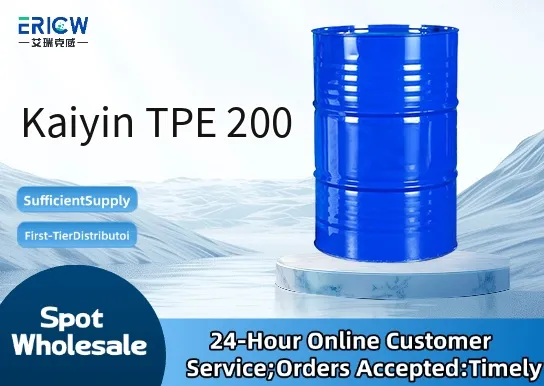
Excellent elasticity and resilience for repeated compression cycles without permanent deformation.
Good processability via injection molding, extrusion, and overmolding onto PP, ABS, and PS substrates.
Low-temperature flexibility down to −40 °C with retained tensile strength and elongation.
Halogen-free formulation compliant with RoHS and REACH directives.
Soft-touch surface finish with adjustable hardness (Shore A 60–90 range available).
Automotive interior components: door trims, gear knobs, and dashboard seals.
Consumer electronics: protective cases, grips for power tools, and wearable device bands.
Household appliances: sealing gaskets, soft buttons, and ergonomic handles.
Medical device accessories: non-slip grips for diagnostic equipment and disposable instrument housings.
Packaging: tamper-evident closures and flexible dispensing nozzles.
| Chemical Type | Thermoplastic Elastomer (TPE), Styrenic Block Copolymer (SBC)-based |
| Product Form | Natural granules, free-flowing, uniform particle size |
| Appearance | Translucent to opaque, beige or natural color (custom colors available) |
| Hardness (Shore A) | 75 ± 3 (standard grade) |
| Tensile Strength | ≈12 MPa (ASTM D412) |
| Elongation at Break | ≈450% (ASTM D412) |
| Specific Gravity | 0.90–0.92 (ASTM D792) |
| Melt Flow Index (200 °C/5 kg) | 18–22 g/10 min (ASTM D1238) |
Q1: What is Kaiyin TPE 200 primarily used for?
A: Kaiyin TPE 200 is a thermoplastic elastomer modifier designed to enhance flexibility, impact resistance, and melt processability in polyolefin-based compounds—commonly applied in soft-touch overmolding, flexible packaging films, and elastic components for automotive interiors and consumer goods.
Q2: Is Kaiyin TPE 200 compatible with polypropylene (PP) and polyethylene (PE)?
A: Yes—it exhibits good compatibility with both homopolymer and copolymer PP, as well as LDPE and HDPE matrices. Optimal dispersion is typically achieved through conventional melt compounding processes such as twin-screw extrusion.
Q3: How should Kaiyin TPE 200 be processed?
A: It can be processed using standard thermoplastic equipment including extruders, injection molding machines, and blow molding systems. Recommended processing temperatures generally range between 160 °C and 210 °C, depending on base resin and equipment configuration.
Q4: Does Kaiyin TPE 200 require drying before processing?
A: While it is not highly hygroscopic, pre-drying at 60–80 °C for 2–4 hours is recommended to ensure consistent melt behavior and avoid surface defects—especially in high-precision or moisture-sensitive applications.
Q5: What are typical dosage levels of Kaiyin TPE 200 in formulations?
A: Dosage depends on the desired balance of elasticity and rigidity, but it is typically used at low concentrations—generally ranging from 0.1% to 2% by weight in PP/PE blends for improved toughness, or up to 15–30% in dedicated TPE compounds where softness and recovery are critical.
Contact With Us:
E-mail: wangxingqiang@ericwchem.com
Have a Questions? Call Us:
Add:
Building A1, Jiete Industrial Park, Huangpu District, Guangzhou City, Guangdong Province, China