English
 Español
 tiếng việt
 русский
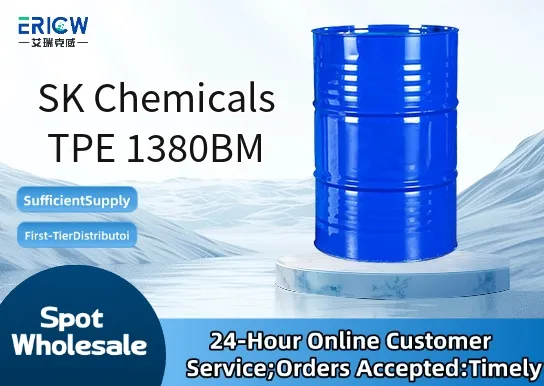
Excellent soft-touch feel with balanced hardness (Shore A 80)
Superior thermal stability for injection molding and extrusion processing
Good resistance to UV degradation and ozone exposure
Low compression set for long-term sealing and gasket performance
Compatible with polypropylene (PP) and polyethylene (PE) for co-extrusion and overmolding
Automotive interior trim components (door panels, armrests, console covers)
Consumer electronics protective cases and grips
Household appliance handles and seals
Medical device grips and non-sterile housings
Industrial tool overmolded ergonomic grips
| Chemical Type | Thermoplastic Elastomer (TPE) – Styrenic Block Copolymer (SBC) based |
| Product Form | Pellets |
| Appearance | Off-white to light tan, free-flowing granules |
| Hardness (Shore A) | 80 ± 3 |
| Melt Flow Rate (200°C/5 kg) | 15–22 g/10 min |
| Density | 0.90–0.92 g/cm³ |
| Primary Applications | Overmolding, soft-touch surfaces, flexible seals and grips |
| Key Features | Processability, tactile comfort, recyclability, PP/PE adhesion |
Q1: What is the primary function of TPE 1380BM in polymer formulations?
A: TPE 1380BM is a thermoplastic elastomer-based processing aid and compatibilizer, designed to improve melt flow, reduce extrusion torque, and enhance interfacial adhesion in multi-polymer blends—particularly in TPE, TPR, and PP/EPDM systems.
Q2: Is TPE 1380BM suitable for food-contact or medical-grade applications?
A: TPE 1380BM is not pre-certified for food-contact or medical use. Its suitability depends on final formulation validation, including full regulatory review by the end-user’s compliance team. It is commonly used in non-regulated industrial and consumer product applications where enhanced processability and surface finish are priorities.
Q3: How should TPE 1380BM be incorporated into a compound?
A: It is typically added during the compounding stage—either via side-feeding or masterbatch dilution—and disperses readily under standard melt-mixing conditions. Pre-drying is generally not required, though handling in low-humidity environments is recommended to maintain consistent feeding behavior.
Q4: Does TPE 1380BM affect the mechanical properties of the final product?
A: At typical usage levels, it maintains or slightly improves tensile strength and elongation while reducing melt viscosity. Significant property shifts may occur at higher loadings, so optimization through small-scale trials is advised for critical performance requirements.
Q5: Can TPE 1380BM be used in combination with other additives such as fillers, plasticizers, or flame retardants?
A: Yes—it demonstrates good compatibility with common additives including calcium carbonate, silica, paraffinic oils, and halogen-free flame retardants. However, interactions can vary depending on additive chemistry and concentration, so compatibility testing is recommended before full-scale implementation.
Contact With Us:
E-mail: wangxingqiang@ericwchem.com
Have a Questions? Call Us:
Add:
Building A1, Jiete Industrial Park, Huangpu District, Guangzhou City, Guangdong Province, China