English
 Español
 tiếng việt
 русский
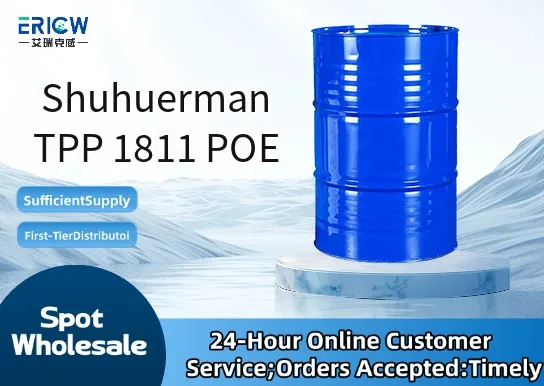
High phosphorus content for superior flame retardancy in polyolefin compounds.
Excellent thermal stability up to 280 °C, suitable for high-temperature processing such as injection molding.
Low volatility and minimal migration, ensuring long-term performance retention in finished products.
Good compatibility with polypropylene (PP), polyethylene (PE), and thermoplastic elastomers (TPE).
Halogen-free formulation meeting RoHS, REACH, and UL 94 V-0 requirements for eco-conscious applications.
Flame-retarded automotive interior components (dashboards, trim, wiring harness sleeves).
Fire-safe cable jacketing and insulation materials for low-smoke zero-halogen (LSZH) cables.
Electrical enclosures and housings requiring UL 94 V-0 rated polyolefin blends.
Building & construction materials including conduit, ducts, and junction boxes.
Consumer electronics casings and connectors where halogen-free compliance is mandatory.
| Chemical Type | Triphenyl phosphate (TPP)-based polyolefin elastomer masterbatch |
| Product Form | Pellets |
| Appearance | Off-white to light beige free-flowing pellets |
| Phosphorus Content (w/w %) | 9.2–9.6% |
| Density (g/cm³ at 23 °C) | 1.18–1.22 |
| Melt Flow Rate (g/10 min, 190 °C/2.16 kg) | 15–25 |
| Key Features | Halogen-free, non-migrating, thermally stable, UL 94 V-0 compliant (at ≥15 wt% loading in PP) |
| Primary Applications | Flame-retardant polyolefin compounds for wire & cable, automotive, and electronics |
Q1: What is the primary function of Shuhuerman TPP 1811 POE in polymer formulations?
A: Shuhuerman TPP 1811 POE functions primarily as a non-migrating, thermally stable plasticizer and processing aid for engineering thermoplastics—especially polyesters, polyacrylates, and certain high-performance polyolefin blends—enhancing melt flow, reducing viscosity during extrusion or injection molding, and improving dimensional stability without significant volatility or exudation.
Q2: Is TPP 1811 POE compatible with PVC or other common vinyl-based systems?
A: No—TPP 1811 POE is specifically designed for non-PVC, high-temperature polymer systems. Its polyether backbone and tailored phenylphosphate structure provide optimal compatibility with polar engineering resins but are not recommended for conventional PVC formulations, where traditional aryl phosphates or phthalate alternatives remain more suitable.
Q3: How does TPP 1811 POE contribute to flame retardancy in finished compounds?
A: As a reactive-type organophosphate derivative, TPP 1811 POE contributes to flame retardancy through condensed-phase action—promoting char formation and reducing fuel release during thermal decomposition. It is typically used in combination with synergists (e.g., metal hydroxides or nitrogen-based co-additives) rather than as a standalone FR solution.
Q4: What handling precautions should be observed during storage and processing?
A: Store in a cool, dry place away from direct sunlight and strong oxidizing agents. During processing, avoid prolonged exposure to temperatures above 220 °C under extended residence times to maintain molecular integrity. Use standard industrial hygiene practices—gloves and eye protection are recommended when handling neat material.
Contact With Us:
E-mail: wangxingqiang@ericwchem.com
Have a Questions? Call Us:
Add:
Building A1, Jiete Industrial Park, Huangpu District, Guangzhou City, Guangdong Province, China