English
 Español
 tiếng việt
 русский
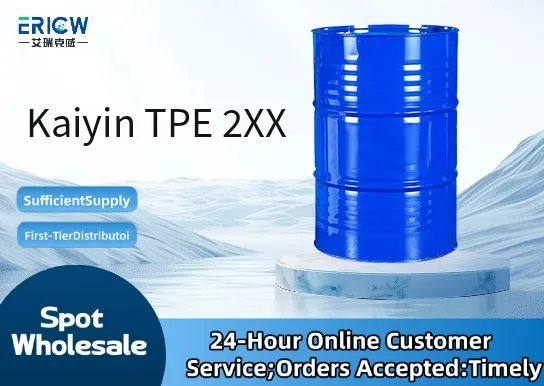
Excellent elasticity and recovery performance across a wide temperature range (−40 °C to +80 °C).
Good processability via injection molding, extrusion, and overmolding onto PP, PS, ABS, and PC substrates.
Low compression set (<25% after 72 h at 70 °C), ensuring long-term sealing and grip integrity.
Halogen-free formulation compliant with RoHS and REACH directives for eco-sensitive applications.
Smooth, matte surface finish with inherent UV resistance and minimal bloom tendency.
Soft-touch grips for power tools, hand-held medical devices, and consumer electronics housings.
Sealing rings and gaskets in automotive fluid systems and HVAC components.
Overmolded handles for kitchen appliances, garden tools, and personal care devices.
Flexible tubing and bellows for low-pressure pneumatic and fluid transfer lines.
Wear-resistant soles and midsoles for lightweight industrial safety footwear.
| Chemical Type | Thermoplastic Elastomer (SEBS-based) |
| Product Form | Natural-colored granules (3–4 mm cylindrical pellets) |
| Appearance | Opaque, uniform beige to light tan granules |
| Shore A Hardness | 65 ± 3 |
| Melt Flow Rate (190 °C/2.16 kg) | 12–16 g/10 min |
| Density | 0.92–0.94 g/cm³ |
| Primary Applications | Overmolding, soft-touch components, dynamic seals |
| Key Features | Elastic recovery, substrate adhesion, halogen-free, low extractables |
Q1: What is the primary function of Kaiyin TPE 2XX in thermoplastic elastomer formulations?
A: Kaiyin TPE 2XX functions as a high-performance compatibilizer and processing aid, enhancing melt homogeneity, improving dispersion of fillers or additives, and supporting consistent extrusion and injection molding behavior in TPE blends.
Q2: Is Kaiyin TPE 2XX suitable for food-contact or medical-grade TPE applications?
A: Kaiyin TPE 2XX is designed for industrial and general-purpose TPE systems. While it meets common regulatory expectations for polymer additives, formal compliance with food-contact or medical-grade requirements depends on final formulation validation and end-use regulatory review—users should conduct full migration and biocompatibility testing as appropriate.
Q3: How does Kaiyin TPE 2XX affect the mechanical properties of TPE compounds?
A: When properly incorporated, Kaiyin TPE 2XX typically supports improved tensile strength and elongation retention after processing, while helping to maintain elasticity and low-temperature flexibility—effects are formulation-dependent and optimized through standard compounding protocols.
Q4: What is the recommended dosage range for Kaiyin TPE 2XX in TPE masterbatches?
A: Dosage is formulation-specific, but Kaiyin TPE 2XX is generally used at low concentrations—typically ranging from 0.1% to 2% by weight—depending on base polymer composition, filler loading, and desired performance balance.
Contact With Us:
E-mail: wangxingqiang@ericwchem.com
Have a Questions? Call Us:
Add:
Building A1, Jiete Industrial Park, Huangpu District, Guangzhou City, Guangdong Province, China