English
 Español
 tiếng việt
 русский
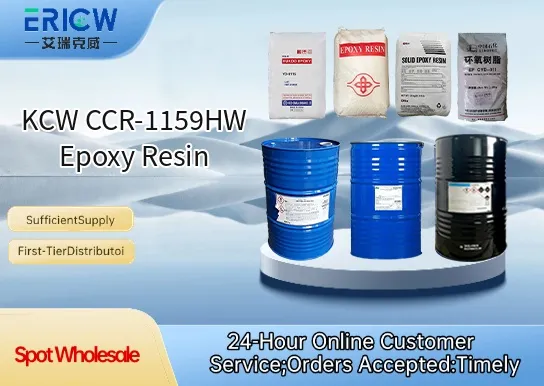
High-performance bisphenol-F-based epoxy resin offering superior chemical resistance and thermal stability.
Low viscosity formulation enabling excellent flow, wetting, and ease of processing in casting and impregnation applications.
Excellent electrical insulation properties with low dielectric loss and high volume resistivity.
Enhanced adhesion to metals, composites, and ceramic substrates without requiring aggressive surface pretreatment.
Compatible with standard amine and anhydride curing agents for flexible formulation design.
High-voltage electrical insulation systems including bushings, insulators, and transformer components.
Structural encapsulation and potting of sensitive electronic modules and power electronics.
Advanced composite matrix resin for aerospace and wind turbine blade manufacturing.
High-reliability adhesive formulations for bonding dissimilar substrates in industrial equipment.
Castable systems for precision tooling, jigs, and wear-resistant industrial linings.
| Chemical Type | Bisphenol-F epoxy resin |
| Product Form | Clear to pale yellow liquid |
| Appearance | Homogeneous, transparent liquid at 25°C |
| Epoxy Equivalent Weight (EEW) | 178–186 g/eq |
| Viscosity (25°C) | 12,000–15,000 mPa·s |
| Chloride Content | ≤ 800 ppm |
| Volatiles Content | ≤ 0.3 wt% |
| Key Features | Low viscosity, high purity, excellent electrical insulation, thermal stability up to 180°C |
Q1: What is the primary functional role of KCW CCR-1159HW in epoxy formulations?
A: KCW CCR-1159HW functions as a reactive diluent and viscosity modifier, enabling improved processability while maintaining good crosslink density and thermal stability in cured systems.
Q2: Is KCW CCR-1159HW compatible with standard amine and anhydride hardeners?
A: Yes, it demonstrates broad compatibility with common aliphatic and aromatic amines, as well as cyclic anhydrides, supporting flexible formulation design for coatings, adhesives, and encapsulants.
Q3: How does KCW CCR-1159HW compare to traditional glycidyl ether diluents in terms of volatility and handling safety?
A: It exhibits significantly lower volatility and higher flash point than conventional mono-functional glycidyl ethers, contributing to reduced inhalation exposure risk and improved workplace handling safety during mixing and application.
Q4: Can KCW CCR-1159HW be used in high-performance composite applications requiring elevated glass transition temperature (Tg)?
A: Yes — its difunctional epoxy structure supports retention of Tg in formulated systems, especially when used at moderate levels alongside higher-molecular-weight resins, making it suitable for structural composites and electrical encapsulation where thermal performance is critical.
Contact With Us:
E-mail: wangxingqiang@ericwchem.com
Have a Questions? Call Us:
Add:
Building A1, Jiete Industrial Park, Huangpu District, Guangzhou City, Guangdong Province, China