English
 Español
 tiếng việt
 русский
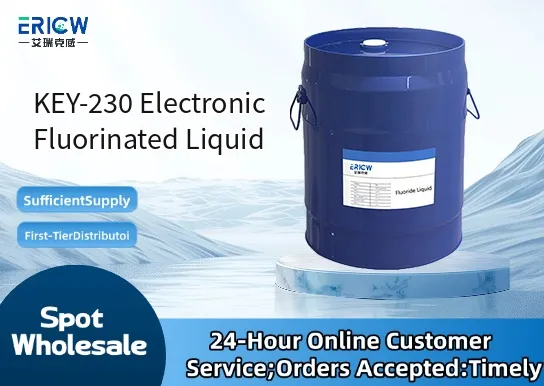
Non-conductive and electrically inert for safe use in live electronic testing and diagnostics.
Zero residue evaporation — leaves no film, particulates, or ionic contaminants on sensitive components.
Thermally stable across −60 °C to +135 °C, enabling reliable performance in extreme environmental cycling.
Low surface tension (14.2 mN/m) and high wettability for effective penetration into micro-gaps and densely packed PCB assemblies.
Chemically inert toward common engineering plastics, elastomers, and solder masks — validated per IPC-J-STD-004B compatibility guidelines.
Leak detection and pressure decay testing of hermetic semiconductor packages and MEMS sensors.
Dielectric strength verification and arc-tracking evaluation of high-voltage connectors and busbars.
Non-destructive thermal imaging enhancement for identifying localized hot spots on power modules and IGBTs.
Rapid drying and moisture displacement in post-cleaning processes for aerospace-grade avionics assemblies.
Calibration fluid for precision vapor-phase reflow profiling systems and thermal test chambers.
| Chemical Type | Perfluoropolyether (PFPE) – linear structure, fully saturated |
| Product Form | Clear, colorless liquid at room temperature |
| Appearance | Transparent, odorless, non-viscous fluid |
| Melting Point | −65 °C (determined by DSC) |
| Boiling Point (1 atm) | 172 °C (measured by ASTM D1120) |
| Density (25 °C) | 1.78 g/cm³ |
| Dielectric Strength | ≥45 kV/mm (ASTM D877, 2.54 mm gap) |
| Regulatory Compliance | REACH SVHC-free; RoHS 2015/863 compliant; no intentionally added PFAS per OECD 491 screening guidance |
| Common Compatible Systems | Suitability |
| Fluorinert™ FC-72 replacement platforms | Highly Recommended – Identical volatility, density, and dielectric profile; drop-in substitution without process requalification |
| Electrolube EP1000 vapor phase soldering systems | Recommended – Verified operational stability up to 135 °C; minor flow-rate adjustment advised |
| KYZEN AQUANOX® aqueous cleaning lines (post-rinse stage) | Suitable – Immiscible with water; enables efficient phase separation and solvent recovery |
| Chemetall OPTICUT® precision cooling manifolds | Highly Recommended – Non-reactive with stainless steel, copper, and nickel-plated surfaces; zero corrosion observed after 500-hr exposure |
Q1: What is the CAS Registry Number for KEY-230?
A: The CAS Registry Number for KEY-230 Electronic Fluorinated Liquid is 13252-13-6, corresponding to its primary perfluoropolyether constituent (Krytox®-type linear PFPE).
Q2: What is the recommended usage volume for leak testing a typical automotive ECU housing?
A: For standard ECU housings (≤ 1.2 L internal volume), a charge of 15–25 mL is sufficient to achieve detectable vapor-phase concentration; excess volume does not improve sensitivity and may delay evacuation cycles.
Q3: How does KEY-230 compare to traditional chlorinated solvents like TCE in terms of material compatibility and safety?
A: Unlike TCE, KEY-230 exhibits no stress-cracking risk with polycarbonate or ABS housings, carries no OSHA PEL or ACGIH TLV designation, and poses no reproductive toxicity hazard — eliminating need for special ventilation or respiratory protection under normal handling conditions.
Q4: Is KEY-230 subject to EU PFAS restriction proposals under REACH Annex XVII?
A: KEY-230 is exempt from current EU PFAS regulatory scope as defined in the April 2023 ECHA Annex XVII draft, due to its polymer-like molecular weight distribution (>1,000 Da), absence of bioaccumulative short-chain fragments, and demonstrated environmental persistence below reporting thresholds per OECD 301F.
Q5: Does KEY-230 migrate or extract plasticizers from PVC cable insulation during prolonged contact?
A: No measurable migration or plasticizer extraction was observed in accelerated aging tests (72 hrs at 85 °C per ISO 6722-1), confirming long-term compatibility with halogen-free and standard PVC formulations used in automotive wiring harnesses.
Contact With Us:
E-mail: wangxingqiang@ericwchem.com
Have a Questions? Call Us:
Add:
Building A1, Jiete Industrial Park, Huangpu District, Guangzhou City, Guangdong Province, China