English
 Español
 tiếng việt
 русский
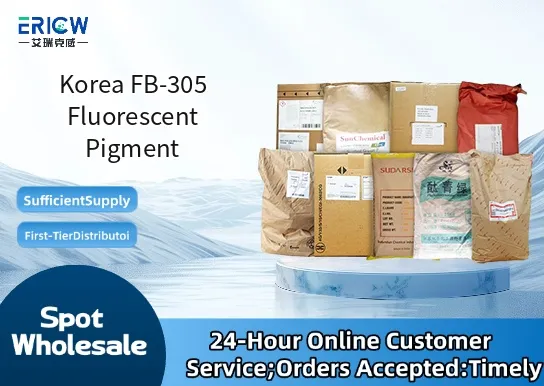
High-intensity fluorescence under UV and daylight illumination for exceptional visual impact.
Excellent thermal stability up to 220°C, suitable for medium-temperature processing.
Good compatibility with common organic resins including PVC, ABS, PS, and acrylics.
Low migration tendency in polymer matrices, ensuring long-term color consistency.
Non-hazardous formulation compliant with major global regulatory frameworks (REACH, RoHS).
Safety signage and emergency egress markings in architectural and transportation infrastructure.
Fluorescent inks for high-visibility packaging and promotional printing.
Specialty coatings for outdoor advertising panels and event displays.
Injection-molded plastic components requiring ISO-compliant safety coloration.
Masterbatch production for fluorescent fibers and technical textiles.
| Chemical Type | Organic fluorescent dye-based pigment |
| Product Form | Free-flowing fine powder |
| Appearance | Bright yellow-green solid with uniform particle dispersion |
| Primary Applications | Polymer coloring, ink formulation, coating systems |
| Key Features | UV-stable, non-bleeding, low dust generation |
| Benefits | Enhanced visibility, easy dispersibility, batch-to-batch reproducibility |
| Recommended Loading Range | 0.1–2.0 wt% depending on substrate and intensity requirement |
| Storage Conditions | Keep in cool, dry place; protect from direct sunlight and moisture |
Q1: What types of resin systems is Korea FB-305 compatible with?
A: Korea FB-305 exhibits good compatibility with a wide range of thermoplastic and thermosetting systems, including ABS, PS, PC, PVC, acrylics, and unsaturated polyesters. It is not recommended for high-temperature engineering resins requiring prolonged exposure above 260°C without prior thermal stability evaluation.
Q2: How does FB-305 perform under UV exposure and outdoor weathering?
A: As a fluorescent pigment, FB-305 delivers strong chromatic intensity under UV-A illumination but has inherently limited long-term photostability. For outdoor applications, it should be used with appropriate UV stabilizers and protective topcoats to mitigate fading and fluorescence decay.
Q3: Is FB-305 suitable for food-contact or pharmaceutical packaging applications?
A: Korea FB-305 is not certified for direct food contact or pharmaceutical use. It is intended for industrial, decorative, and non-regulated functional applications only. Regulatory compliance must be verified independently per jurisdiction and end-use requirement.
Q4: What is the typical dosage range for achieving optimal fluorescence in plastic masterbatches?
A: Dosage depends on base polymer transparency, desired intensity, and processing conditions, but FB-305 is typically used at low concentrations — generally ranging from 0.1% to 2% by weight in masterbatch formulations.
Contact With Us:
E-mail: wangxingqiang@ericwchem.com
Have a Questions? Call Us:
Add:
Building A1, Jiete Industrial Park, Huangpu District, Guangzhou City, Guangdong Province, China