English
 Español
 tiếng việt
 русский
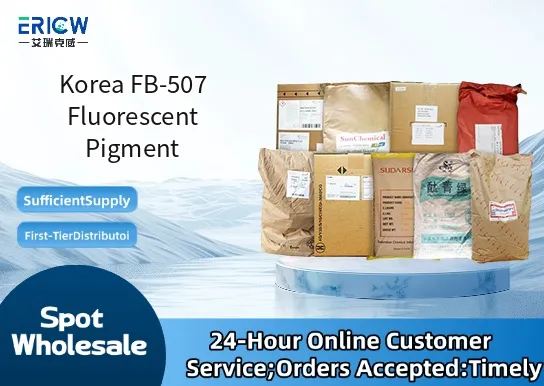
High-intensity fluorescence under UV and daylight illumination.
Excellent thermal stability up to 220°C for extrusion and baking processes.
Good dispersibility in polar and non-polar polymer matrices including ABS, PS, and PVC.
Low migration tendency, ensuring color consistency in end-use applications.
Compliant with major global regulatory frameworks for non-food-contact industrial use.
Fluorescent signage and safety markings for transportation and public infrastructure.
High-visibility components in automotive interior trim and dashboard indicators.
Special-effect inks for security printing and brand authentication labels.
Bright decorative elements in consumer electronics housings and accessories.
UV-responsive additives in industrial coatings and plastic films.
| Chemical Type | Disazo-based fluorescent organic pigment |
| Product Form | Free-flowing fine powder |
| Appearance | Bright yellow-green solid with characteristic fluorescence |
| Primary Applications | Plastics, coatings, and specialty inks |
| Key Features | UV-stable, non-bleeding, low volatility |
| Benefits | Enhanced visual impact, process robustness, consistent batch-to-batch performance |
| Storage Conditions | Keep in cool, dry place; avoid direct sunlight and moisture |
Q1: What types of resin systems is Korea FB-507 compatible with?
A: Korea FB-507 demonstrates good compatibility with a broad range of thermoplastic and thermosetting systems, including ABS, PS, PVC, acrylics, polyesters, and epoxy resins. Compatibility should be verified through small-scale trials under actual processing conditions due to formulation-specific variables.
Q2: How stable is FB-507 under thermal processing conditions?
A: FB-507 is engineered for enhanced thermal stability and retains strong fluorescence during standard melt processing operations such as injection molding and extrusion. Performance may vary depending on residence time, shear history, and peak temperature—optimal results are typically achieved below 240°C.
Q3: Can FB-507 be used in outdoor applications requiring UV resistance?
A: While FB-507 delivers high initial brightness, fluorescent pigments inherently experience gradual intensity loss under prolonged UV exposure. For extended outdoor service life, co-stabilization with HALS and UV absorbers is strongly recommended, and performance validation under real-world or accelerated weathering conditions is advised.
Q4: What is the typical dosage range for achieving vivid fluorescence in polymer masterbatches?
A: Dosage depends on the base polymer, desired chroma, and final part thickness, but FB-507 is generally effective at low concentrations—typically ranging from 0.1% to 2% by weight in masterbatch formulations. Higher loadings may increase opacity or affect mechanical properties, so optimization is recommended per application.
Q5: Is Korea FB-507 suitable for food-contact or medical-grade applications?
A: Korea FB-507 is not pre-qualified for direct food-contact or regulated medical applications. Its use in such areas requires full regulatory assessment—including migration testing and compliance verification against applicable regional requirements—by the end-formulator or compounder.
Contact With Us:
E-mail: wangxingqiang@ericwchem.com
Have a Questions? Call Us:
Add:
Building A1, Jiete Industrial Park, Huangpu District, Guangzhou City, Guangdong Province, China