English
 Español
 tiếng việt
 русский
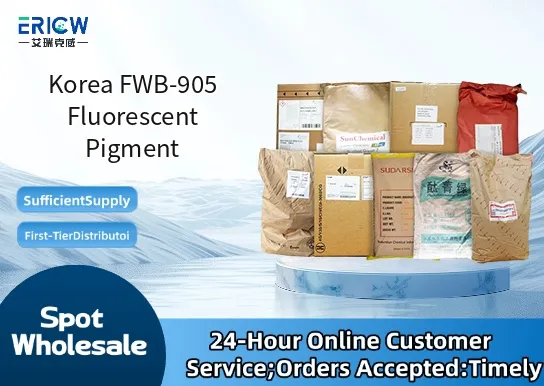
High-intensity fluorescence under UV and daylight illumination.
Excellent thermal stability up to 180°C for processing in extrusion and injection molding.
Good dispersion performance in both polar and non-polar polymer matrices.
Low migration tendency, ensuring color fidelity in end-use applications.
Compliant with major regulatory frameworks for non-food-contact industrial uses.
Fluorescent signage and safety markings for transportation and infrastructure.
High-visibility components in personal protective equipment (PPE).
Decorative and functional additives in engineering thermoplastics (e.g., ABS, PS, PC).
UV-responsive inks for security printing and authentication labels.
Specialty coatings for industrial equipment requiring daylight-enhanced visibility.
| Chemical Type | Organic fluorescent dye derivative |
| Product Form | Fine free-flowing powder |
| Appearance | Bright yellow-green powder |
| Primary Applications | Polymer masterbatches, solvent-based inks, and protective coatings |
| Key Features | UV-stable, non-bleeding, low-volatility |
| Benefits | Consistent hue batch-to-batch, easy integration into standard compounding lines |
| Storage Conditions | Store in cool, dry place; protect from direct sunlight and moisture |
| Shelf Life | 24 months from date of manufacture under recommended storage |
Q1: What types of resin systems is FWB-905 compatible with?
A: FWB-905 demonstrates good compatibility with a broad range of thermoplastic and thermosetting systems, including ABS, PS, PVC, acrylics, and certain polyesters. It is not recommended for high-temperature engineering resins such as PEEK or polyimides without prior thermal stability evaluation.
Q2: How does FWB-905 perform under UV exposure and outdoor weathering?
A: As a fluorescent pigment, FWB-905 delivers strong chromatic intensity under UV-A illumination but exhibits moderate lightfastness in prolonged direct sunlight. For outdoor applications, co-stabilization with UV absorbers and HALS is strongly advised to extend fluorescence retention.
Q3: Can FWB-905 be used in food-contact plastics?
A: FWB-905 is not certified for direct food-contact applications. It is intended for decorative, industrial, and non-regulated functional uses only. Regulatory compliance must be confirmed separately by the end-user based on applicable regional requirements.
Q4: What is the typical dosage range for optimal fluorescence effect?
A: Optimal loading generally ranges from 0.1% to 2% by weight, depending on base polymer transparency, desired brightness level, and processing conditions. Lower concentrations are often sufficient in clear matrices, while higher loadings may be needed in opaque or highly pigmented systems — always verify dispersion quality and thermal stability at target dosage.
Q5: Does FWB-905 require special dispersion or processing precautions?
A: Yes — due to its fine particle nature and organic composition, FWB-905 benefits from gentle yet thorough dispersion using low-shear mixing during compounding. Avoid excessive melt temperature (>220°C) and extended residence time to prevent fluorescence degradation. Pre-dilution in carrier resin is recommended for consistent distribution.
Contact With Us:
E-mail: wangxingqiang@ericwchem.com
Have a Questions? Call Us:
Add:
Building A1, Jiete Industrial Park, Huangpu District, Guangzhou City, Guangdong Province, China