English
 Español
 tiếng việt
 русский
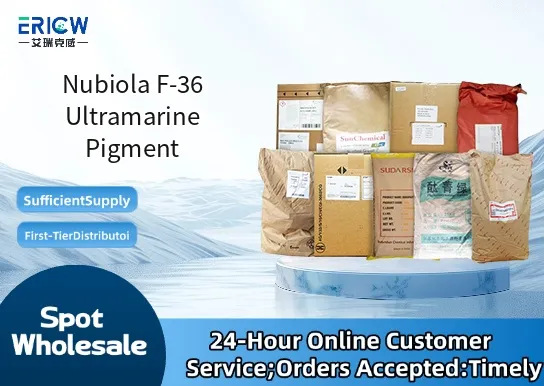
Exceptional lightfastness and weather resistance for long-term color stability.
High tinctorial strength with intense, clean blue-violet hue.
Excellent dispersibility in aqueous and solvent-based systems.
Non-toxic, sulfate-free formulation compliant with major global regulatory frameworks.
Thermally stable up to 180°C, suitable for medium-temperature processing.
Architectural coatings and exterior wall paints.
Plastic coloration for rigid PVC, polyolefins, and ABS.
Printing inks for packaging and commercial offset applications.
Artist-grade acrylics, gouache, and watercolor formulations.
Specialty cosmetic products including pressed powders and nail enamels.
| Chemical Type | Sodium aluminosilicate sulfide |
| Product Form | Fine dry powder |
| Appearance | Free-flowing, uniform blue-violet powder |
| Primary Applications | Coatings, plastics, inks, cosmetics, artists' colors |
| Key Features | Lightfastness (ISO 105-B02): Grade 7–8; Heat stability: ≤180°C |
| Heavy Metals | Compliant with EU Directive 2009/148/EC (lead, cadmium, mercury, chromium VI) |
| pH (10% aqueous dispersion) | 6.5–7.5 |
| Particle Size (D50) | 8–12 µm |
Q1: What is the primary chemical composition of Nubiola F-36 Ultramarine Pigment?
A: Nubiola F-36 is a synthetic ultramarine pigment based on a complex sodium aluminosilicate structure, with sulfur-containing chromophores responsible for its intense blue hue. It contains no heavy metals and is free from cadmium, lead, or chromium.
Q2: Is Nubiola F-36 suitable for use in food-contact plastics or packaging applications?
A: While Nubiola F-36 complies with general safety requirements for pigments used in non-intent-to-contact food packaging, it is not certified for direct food contact under major global regulatory frameworks. Formulators should conduct full regulatory assessment based on final application, migration testing, and applicable regional requirements.
Q3: How does Nubiola F-36 perform under acidic conditions?
A: Like most ultramarine pigments, F-36 is sensitive to low pH environments and may undergo color degradation or fading when exposed to strong acids. It is recommended for neutral to mildly alkaline systems and should be avoided in formulations containing acidic monomers, catalysts, or additives without thorough compatibility testing.
Q4: What is the typical dosage range for Nubiola F-36 in polymer masterbatches?
A: Dosage depends on the desired shade intensity and polymer matrix, but F-36 is typically used at low concentrations—generally ranging from 0.1% to 2% by weight in polyolefin or PVC masterbatches. Its high tinctorial strength allows efficient coloration with minimal loading.
Contact With Us:
E-mail: wangxingqiang@ericwchem.com
Have a Questions? Call Us:
Add:
Building A1, Jiete Industrial Park, Huangpu District, Guangzhou City, Guangdong Province, China