English
 Español
 tiếng việt
 русский
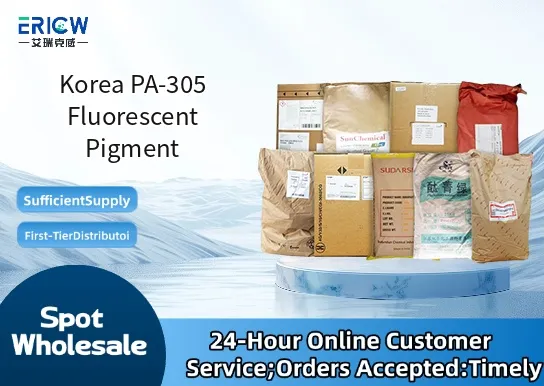
High-intensity fluorescence under UV and daylight exposure.
Excellent thermal stability up to 180°C for processing in extrusion and injection molding.
Good dispersion performance in both polar and non-polar polymer matrices.
Low migration tendency, ensuring color consistency in end-use applications.
Compliant with major international regulatory frameworks for non-food-contact industrial use.
Fluorescent masterbatches for polyolefins (PP, PE) and engineering plastics (ABS, PS).
Safety signage and high-visibility traffic markings.
UV-responsive packaging films and tamper-evident labels.
Specialty inks for security printing and document authentication.
Industrial coatings requiring daylight-fluorescent visual impact.
| Chemical Type | Organic fluorescent pigment (Benzoxazole derivative) |
| Product Form | Free-flowing fine powder |
| Appearance | Yellow-green fluorescent powder |
| Primary Applications | Polymer masterbatches, coatings, inks |
| Key Features | UV-stable, non-bleeding, heat-resistant |
| Particle Size (D50) | 15–25 µm |
| pH Stability Range | 5.0–9.0 |
| Storage Conditions | Keep dry, below 30°C, away from direct sunlight |
Q1: What types of resin systems is Korea PA-305 compatible with?
A: Korea PA-305 is formulated for compatibility with common thermoplastic and thermosetting resins, including ABS, PS, PVC, acrylics, and polyester-based systems. Performance may vary depending on processing temperature and shear conditions—pre-dispersion or masterbatch dilution is recommended for optimal dispersion.
Q2: How does PA-305 perform under UV exposure and outdoor weathering?
A: As a fluorescent pigment, PA-305 delivers strong chromatic brightness under UV-A illumination but is not inherently UV-stabilized. For extended outdoor applications, co-addition of appropriate UV absorbers and HALS stabilizers is strongly advised to maintain fluorescence intensity and prevent premature fading.
Q3: What is the typical dosage range for achieving effective fluorescence in plastic applications?
A: Effective fluorescence is typically achieved at low concentrations, generally ranging from 0.1% to 2% by weight, depending on substrate transparency, desired intensity, and processing method. Higher loadings do not always improve performance and may impact mechanical properties or cause agglomeration.
Q4: Is PA-305 suitable for food-contact or medical-grade polymer applications?
A: Korea PA-305 is not certified for direct food contact or medical device applications. It is intended for general industrial use, such as signage, decorative plastics, and non-regulated consumer goods. Regulatory compliance must be verified independently per jurisdiction and end-use requirements.
Contact With Us:
E-mail: wangxingqiang@ericwchem.com
Have a Questions? Call Us:
Add:
Building A1, Jiete Industrial Park, Huangpu District, Guangzhou City, Guangdong Province, China