English
 Español
 tiếng việt
 русский
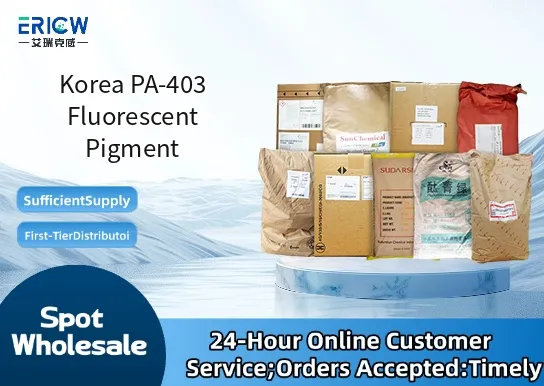
High-intensity fluorescence under UV and daylight exposure for superior visual impact.
Excellent thermal stability up to 220°C, suitable for high-temperature processing including masterbatch extrusion.
Good dispersibility in both polar and non-polar polymer matrices without requiring specialized dispersants.
Low migration tendency in PVC, PS, ABS, and polyolefin-based systems, ensuring long-term color fidelity.
Compliant with REACH and RoHS directives; free of heavy metals and restricted aromatic amines.
Safety signage and emergency egress markings in construction and transportation sectors.
Fluorescent inks for security printing, banknote features, and brand authentication labels.
UV-responsive additives in automotive interior trims and dashboard components.
Bright colorants for consumer electronics housings and wearable device casings.
High-visibility elements in sportswear textiles and outdoor safety apparel (via polymer-compatible carrier systems).
| Chemical Type | Organic fluorescent pigment (benzoxazole derivative) |
| Product Form | Fine dry powder |
| Appearance | Yellow-green fluorescent powder with slight bluish undertone |
| Primary Applications | Polymer coloring, ink formulation, coating systems |
| Key Features | UV-A responsive (365 nm), daylight-enhanced fluorescence |
| Heat Resistance | 220°C (short-term, 5 min) |
| Lightfastness (Xenon Arc) | Grade 4–5 (ISO 105-B02, 20 h exposure) |
| Density | 1.35–1.42 g/cm³ |
Q1: What types of resin systems is Korea PA-403 compatible with?
A: Korea PA-403 is formulated for compatibility with common thermoplastic and thermosetting systems, including ABS, PS, PVC, acrylics, and unsaturated polyesters. It exhibits good dispersion stability in non-polar to moderately polar matrices but may require optimization in highly polar or water-based systems.
Q2: How does PA-403 perform under UV exposure and outdoor weathering?
A: As a fluorescent pigment, PA-403 delivers strong chromatic intensity under UV-A illumination; however, its long-term photostability is moderate. Prolonged direct UV exposure and thermal aging may lead to gradual fluorescence attenuation. For extended outdoor applications, co-stabilization with UV absorbers and HALS is recommended.
Q3: What is the recommended dosage range for achieving optimal fluorescence without compromising physical properties?
A: PA-403 is typically used at low concentrations to maximize fluorescence efficiency while minimizing potential effects on melt viscosity or mechanical integrity. The effective dosage generally ranges from 0.1% to 2% by weight, depending on substrate transparency, desired intensity, and processing conditions.
Q4: Is PA-403 suitable for food-contact or pharmaceutical packaging applications?
A: Korea PA-403 is not pre-qualified for direct food-contact or pharmaceutical use. Its regulatory status must be verified case-by-case against applicable regional requirements (e.g., FDA 21 CFR, EU Plastics Regulation), and full formulation testing—including extractables and migration profiling—is required prior to such applications.
Contact With Us:
E-mail: wangxingqiang@ericwchem.com
Have a Questions? Call Us:
Add:
Building A1, Jiete Industrial Park, Huangpu District, Guangzhou City, Guangdong Province, China